
Regulatory Record
FDA Warning Letter
On May 29, 2026, FDA issued Warning Letter 320-26-83 to Macau-Union Pharmaceutical Limited, a drug manufacturing facility operating from Macao SAR China. The letter, issued by the Center for Drug Evaluation and…
Macau-Union Pharmaceutical Warning Letter: Process Validation and the CMC Pattern Every OTC Quality Director Must Recognize
Source Context
On this recordRecord overview
Regulatory Event
On May 29, 2026, FDA issued Warning Letter 320-26-83 to Macau-Union Pharmaceutical Limited, a drug manufacturing facility operating from Macao SAR China. The letter, issued by the Center for Drug Evaluation and Research’s (CDER) Office of Manufacturing Quality following a three-day inspection in December 2025, documents something I rarely see stated this plainly in a Warning Letter: the company did not have a finished product release testing program, did not have a component testing program, did not have process validation, and did not have a stability program. All four of these are not optional enhancements to a pharmaceutical quality system. They are the pharmaceutical quality system. When all four are absent simultaneously, FDA’s message — and its enforcement action — will be unambiguous.
FDA placed all drugs from this facility on Import Alert 66-40 on March 24, 2026, two months before the Warning Letter was even issued. That sequencing tells you something important about how FDA’s enforcement timeline worked here: the import alert came first, based on what investigators found during the December 2025 inspection, and the formal Warning Letter followed. The practical consequence is that every batch of Macau-Union product intended for the US market is presumptively detained at the border. Remediation does not begin with responding to the Warning Letter. It began the moment the inspection ended, and the company is already months behind.
The lead observation under 21 CFR 211.165(a) and (b) — the requirement to perform appropriate laboratory testing of each batch prior to release — is the most direct indictment. The company confirmed to FDA investigators that it had no procedures for testing finished drug products and could only provide evidence of testing for appearance and weight. Let me translate what that means in practice. A topical OTC drug product like an analgesic rub contains one or more active ingredients — the Warning Letter redacts the specific API (Active Pharmaceutical Ingredient) names, but the Bamboo Pharmacy products listed as unapproved new drugs reference herbal actives alongside conventional external analgesic claims. A batch release decision made without identity testing, without assay of active ingredient concentration, and without microbiological testing is not a release decision at all. It is a guess. And when the company did belatedly submit analytical reports in its 483 response, those reports showed active ingredient concentrations below labeled values without scientific justification — a sub-potency finding that is simultaneously a 21 CFR 211.165 violation and an adulteration finding under FD&C Act section 501(c).
What the Record Documents
The second observation under 21 CFR 211.84(d)(1) and (2) addresses the incoming component side of the same failure. The company was accepting APIs and other materials based solely on supplier certificates of analysis, without performing identity testing or periodically verifying those COA results against independent test data. This is a well-documented enforcement pattern. Relying exclusively on a supplier’s COA, without any confirmatory in-house identity test and without periodic audits or retesting to validate the supplier’s analytical program, does not constitute adequate component qualification under 21 CFR Part 211. FDA has cited this deficiency pattern consistently — from international API sites to domestic OTC manufacturers — because the COA alone tells you what the supplier measured, not what was actually delivered to your facility.
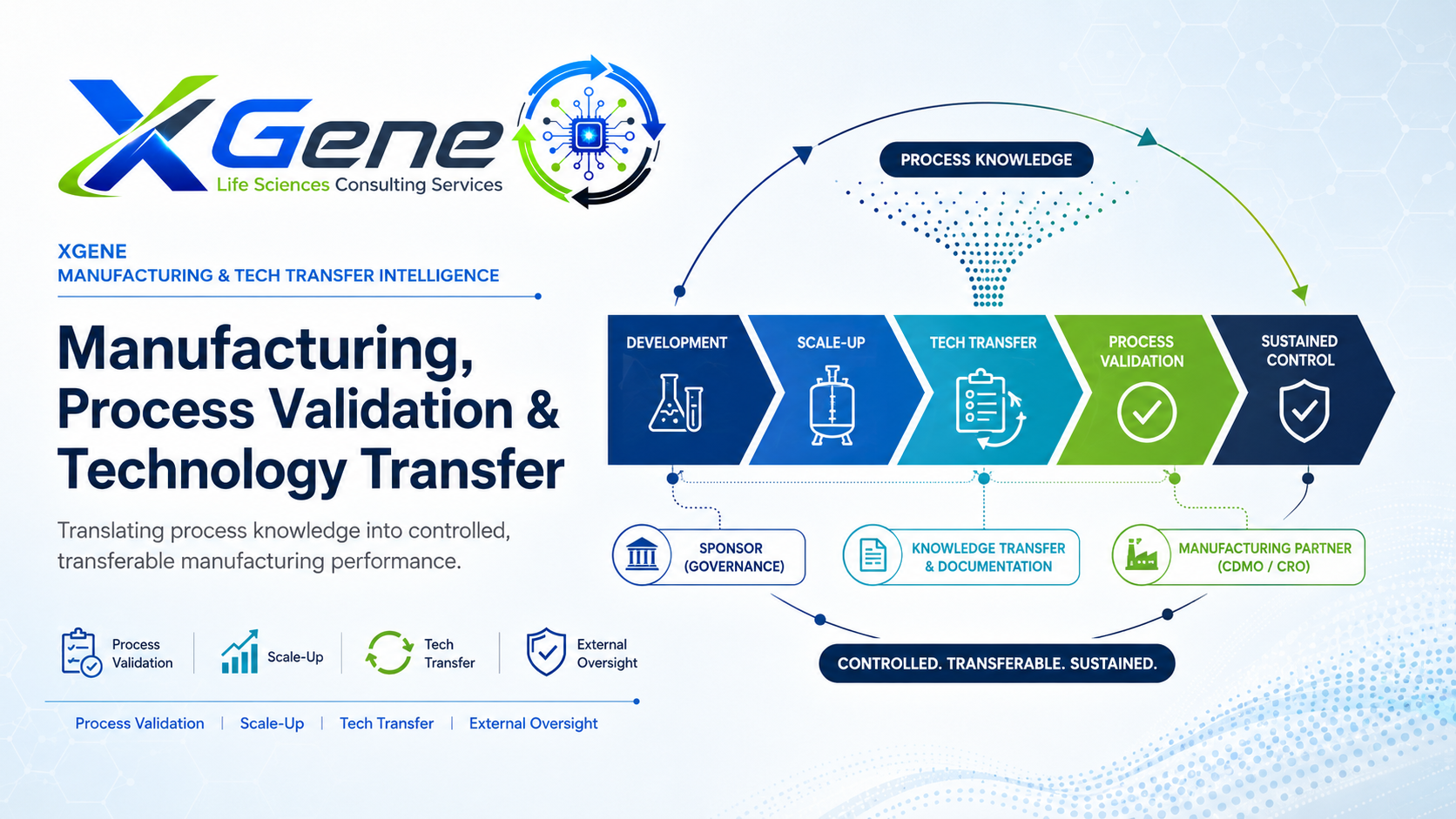
The third observation, under 21 CFR 211.100(a), is where the process validation failure is made explicit. The company had no process validation studies to demonstrate reproducibility and control of its manufacturing processes. It also had inadequate cleaning procedures for shared equipment — a finding that often accompanies the absence of process validation, because cleaning validation requires the same structured lifecycle thinking: defining the worst-case scenario, establishing acceptance criteria based on residue limits and analytical sensitivity, and verifying reproducibility across multiple cleaning cycles. The FDA 2011 Process Validation Guidance describes three stages: Stage 1 (Process Design), Stage 2 (Process Qualification — the PPQ runs that demonstrate the process performs consistently at commercial scale), and Stage 3 (Continued Process Verification). Macau-Union had not reached Stage 1. There was no design space, no formal identification of critical process parameters or critical quality attributes, and no process performance qualification protocol. When FDA requests “a detailed summary of your validation program for ensuring a state of control throughout the drug product lifecycle,” the remediation work implied by that request is measured in years, not months.
Technical and Quality Context
The fourth observation under 21 CFR 211.137(a) closes the loop. The stability program required to support expiration dating did not exist. FDA’s requirement is straightforward: before you put an expiration date on a drug product label, you must have stability data demonstrating that the product will remain within specification through that date, under conditions representative of storage and distribution. The company committed in its 483 response to establishing a program in compliance with USP (United States Pharmacopeia) <1150>, but FDA found the response inadequate — no stability-indicating methods, no stability studies in the marketed container-closure system, no ongoing annual program to verify shelf-life claims. A labeled expiry that is not supported by a validated stability program is, in FDA’s regulatory framing, a misrepresentation of the product’s quality.
What makes this Warning Letter instructive beyond the individual citations is what it reveals about quality system architecture failures in small international OTC manufacturers. I have seen this pattern before, particularly at facilities that manufacture for markets with less rigorous import controls and then attempt to enter the US market without restructuring their quality infrastructure to match US CGMP (Current Good Manufacturing Practice) requirements. The assumption — sometimes explicit, sometimes implicit — is that OTC topical products are lower-risk than sterile injectables or solid oral dosage forms, and that the US market will apply proportionately relaxed standards. That assumption is incorrect. FDA’s CGMP requirements under 21 CFR Parts 210 and 211 apply to all finished drug products, including OTC topicals, and the enforcement framework — including import alerts and Warning Letters — is applied without product-class carve-outs for risk tier.
The unapproved new drug findings involving the Bamboo Pharmacy products add a distinct regulatory dimension. Products that bear “Drug Facts” labeling with OTC drug use claims must conform to a final FDA monograph — in this case, M017 for external analgesic drug products. Claims to “Promote Healing Improve Circulation Reduce Inflammation” and active ingredients described as “natural herbs” are not permitted under M017. These products are simultaneously unapproved new drugs under FD&C Act section 505(a) and misbranded under section 502(ee). The CGMP failures and the unapproved drug findings are legally independent violations, but together they indicate a quality and regulatory affairs infrastructure that has not been structured for US market compliance at any level.
Decision Relevance
For a company facing this combination of findings, the path forward requires more than writing new SOPs (Standard Operating Procedures) and submitting them to FDA. CDER’s own recommendation in this Warning Letter — that the company engage a qualified CGMP consultant under 21 CFR 211.34 to perform a comprehensive six-system audit — reflects how far the quality system currently is from a state of control. A six-system audit examines quality system, facilities and equipment, materials, production, laboratory controls, and packaging and labeling as an integrated compliance assessment. That assessment must be completed before the company can even meaningfully estimate the scope of remediation work. Companies managing similar situations — complete quality system rebuilds under import alert conditions, with both CGMP and unapproved drug findings — benefit from structured CMC remediation programs that sequence the work correctly: materials system and laboratory controls first, to establish the testing foundation; process validation second, once the manufacturing process is defined and controlled; stability last, because the stability program can only be designed once the drug product specification and manufacturing process are stable. This is the kind of structured remediation support that XGene Consulting provides — not simply advising on individual SOP revisions, but building the integrated quality system architecture that survives reinspection.
Practitioners who manage OTC drug manufacturing operations for international markets should use this Warning Letter as a reference point. The question is not whether your facility performs better than Macau-Union — that bar is low. The question is whether your quality system can demonstrate, with data, that every batch is tested before release, every component is qualified before use, every manufacturing process has validated operating ranges, and every expiration date is supported by a stability study. If the answer to any of those four questions is uncertain, the uncertainty itself is the compliance risk.
Primary regulatory references
Connected intelligence
Continue through the evidence graph.
Article
OOS Root Cause Analysis — Moving Beyond ‘Analyst Error’
"Analyst error" is not a root cause — it is a conclusion in search of evidence, and FDA’s May 2022 Level 2 revised OOS guidance is…Article
Chiral Drug Substances: Stereospecific Synthesis, Enantiomeric Purity, and the ICH Q6A Specification Strategy
More than half of the small molecule drugs approved by FDA in any given year contain at least one stereocenter. For most of those programs, the…Article
CAPA Effectiveness Verification — Closing the Loop FDA Actually Closes
An FDA investigator reviewing your CAPA system is not interested in how many CAPAs you have opened — they are interested in how many you have…Article
CareFusion 213, LLC (BD) Class I Recall — ChloraPrep Sterile Antiseptic Applicators: The Sterile Manufacturing System Failure Behind the Recall and What Every Aseptic Processing Director Must Address
CareFusion 213, LLC, a subsidiary of Becton, Dickinson and Company (BD), has recalled two configurations of its BD ChloraPrep One-Step and FREPP Clear sterile antiseptic applicators…From record to action
Use the evidence in context.
Continue into related XGene analysis or discuss the technical implication when the issue needs action.