
Regulatory Record
EMA GMP Non-Compliance — Bio-Thera Solutions’ Guangzhou Facility: The Deviation…
Bio-Thera Solutions Ltd.'s Yonghe manufacturing facility in Guangzhou, China, is now carrying a split GMP finding from the EU regulatory network. France's Agence Nationale de Sécurité du Médicament et des produits de…
EMA GMP Non-Compliance — Bio-Thera Solutions’ Guangzhou Facility: The Deviation Management Finding Behind the Statement and What Every Quality Director With EU/US Dual Programs Must Know
Source Context
On this recordRecord overview
Regulatory Event
Bio-Thera Solutions Ltd.’s Yonghe manufacturing facility in Guangzhou, China, is now carrying a split GMP finding from the EU regulatory network. France’s Agence Nationale de Sécurité du Médicament et des produits de santé (ANSM) inspected the site on behalf of the European Medicines Agency’s (EMA) GMP inspection programme, with the inspection concluding February 12, 2026. On June 12, 2026, the finding was recorded in EudraGMDP as non-compliance report 2026_NCR_MEDBIO_003. The result is unusual in its structure: the drug substance manufacturing segment of the facility was found compliant and its GMP certificate was renewed, while the drug product segment — formulation and fill-finish — was found temporarily non-compliant with EU GMP requirements, rooted in a Major deficiency in deviation management system implementation. For an EU-third-country inspection, that split outcome is itself worth understanding, since it shows compliance status is assessed at the process-segment level rather than only at the site level. This is the fourth quarter in which XGene has tracked EMA network inspections of Chinese biologics and biosimilar manufacturing sites, and the segment-level split recorded here is one of the more granular outcomes published to date, since many EudraGMDP records disclose only a single compliant/non-compliant status for an entire site rather than breaking status out by process segment.
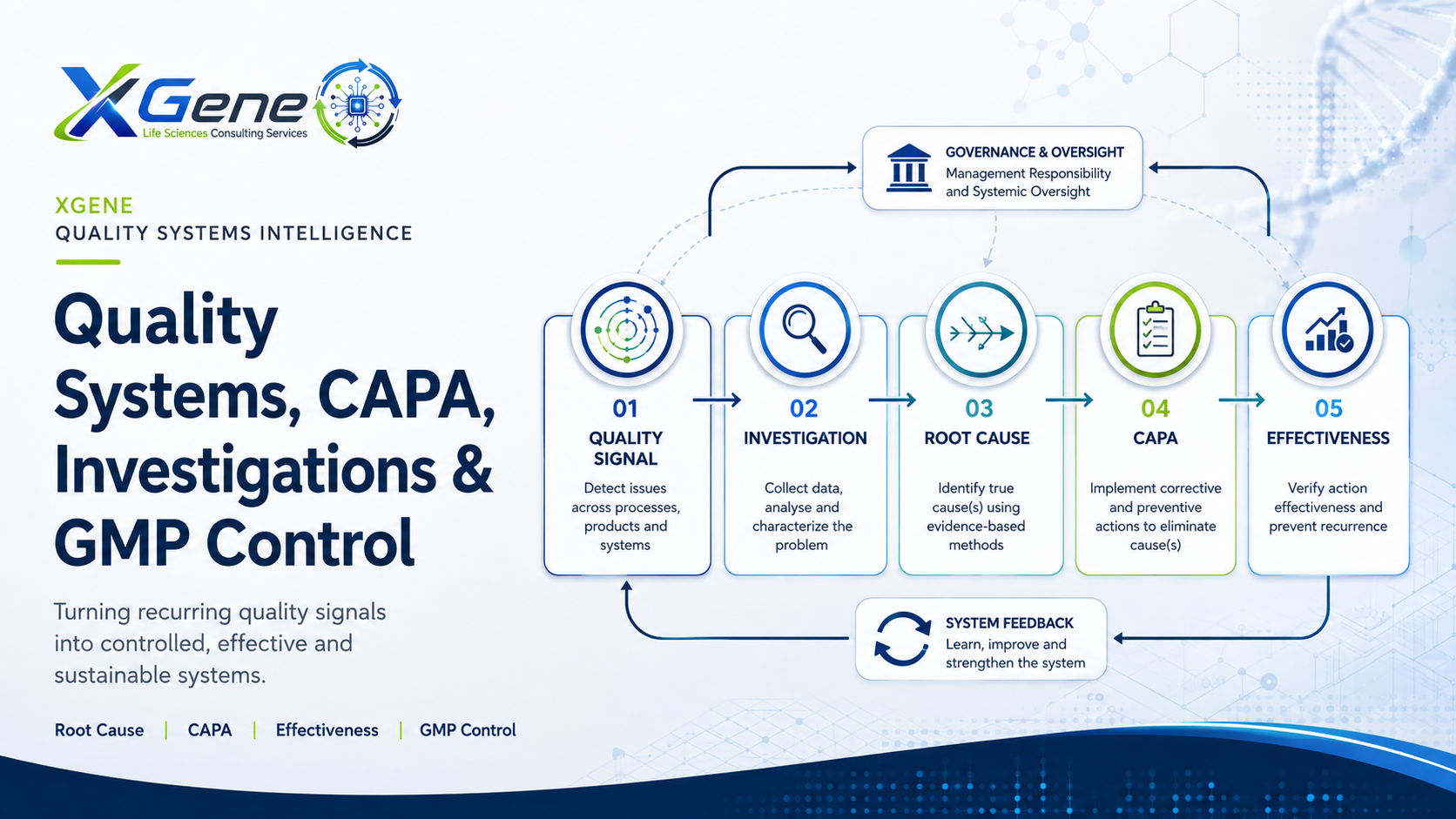
Per Bio-Thera’s own public disclosure, the deficiency centers on inadequate implementation of the deviation management system within the fill-finish operation, not a sterility assurance finding and not a data integrity finding in the narrow sense. Deviation management is the quality-system control that governs how a site identifies, investigates, and dispositions unplanned departures from validated process parameters, and it typically requires documented root cause analysis, an assessment of potential product quality impact, and, where appropriate, corrective and preventive action carried through to an effectiveness check rather than closure alone. A system found inadequately implemented does not necessarily mean deviations went uninvestigated; it means the site could not demonstrate, to ANSM’s satisfaction, that its process for capturing, evaluating, and closing deviations meets the standard that EU GMP Chapter 1 and the ICH Q10 pharmaceutical quality system model expect of a mature quality system. Investigators reviewing a deviation management system typically sample a cross-section of recent deviations, trace each through initiation, investigation, disposition, and CAPA linkage, and assess whether the population as a whole demonstrates consistent, science-based decision-making rather than isolated documentation. Bio-Thera has entered a re-inspection process and states it will continue engaging with ANSM and EMA to expedite it, though no confirmed re-inspection date has been publicly disclosed as of this writing.
What the Record Documents
Bio-Thera Solutions holds a U.S. Food and Drug Administration (FDA)-approved biosimilar, Avzivi (bevacizumab-tnjn), approved in December 2023 as a biosimilar referencing Avastin, with the same molecule also carrying EMA approval as BAT1706/Avzivi. Whether the specific EU-flagged drug product manufacturing line is the same line that supplies FDA-approved US product is not confirmed in the public disclosures reviewed for this article, and that connection should be treated as an open verification question rather than an assumed fact — a distinction that matters, because overstating cross-border exposure would be as misleading as ignoring it entirely. One process-level nuance is also worth noting: this inspection was conducted by an EU national competent authority at a third-country site, as part of the EMA network’s oversight of non-EU manufacturing that supplies the EU market, which is a different oversight track from the reciprocal reliance arrangements under the FDA-EU Mutual Recognition Agreement, arrangements that primarily cover inspections conducted within US and EU/EEA territory rather than third-country manufacturing.
Deviation management sits on both sides of the Atlantic under closely related expectations. FDA’s parallel framework runs through 21 CFR 211.192 on production record review and the CAPA element of ICH Q10, both of which the two authorities reference as a broadly harmonized pharmaceutical quality system model developed through the ICH process. Where EU GMP and FDA expectations align is the underlying principle: a deviation management system is not simply a form completed after something goes wrong; it generally requires root cause investigation, an assessment of impact on product quality, and, where warranted, corrective and preventive action with an effectiveness check that goes beyond a closure date on a tracking log. Where inspection emphasis can diverge in practice: EU inspectors operating under the Annex 15 and Chapter 1 framework often examine how deviation trends feed back into the pharmaceutical quality system’s periodic management review, while FDA inspections frequently focus more narrowly on whether an individual deviation’s disposition was scientifically justified before the affected batch was released to market. For quality directors managing both an FDA and an EMA-facing program, this divergence in inspection emphasis is precisely the kind of nuance that a generic global SOP will not capture; a deviation procedure written to satisfy one authority’s review pattern may still leave a gap when read by the other.
Technical and Quality Context
Any EU marketing authorization holder whose product formulation or fill-finish work is tied to this Guangzhou site should confirm directly with Bio-Thera the precise scope of the affected segment, the current status of the re-inspection timeline, and whether any batches already released to the EU market fall within the non-compliant period. Bio-Thera has disclosed that EU-linked commercial revenue exposure is small relative to total company revenue — approximately 0.11% of total revenue in 2025 and roughly 1.87% in the first quarter of 2026 — but that disclosure addresses the company’s financial exposure. It does not, on its own, answer a marketing authorization holder’s separate regulatory obligation to assess whether product already in distribution requires action, recall evaluation, or additional testing.
US companies with a licensing, supply, or biosimilar development relationship touching Bio-Thera’s Guangzhou operations should independently verify which manufacturing segment supports their own product, rather than assuming a “drug substance compliant” finding extends to the full supply chain. This case is a clean illustration that GMP status can diverge below the site level: a facility can pass inspection on upstream biologics manufacturing while carrying an active non-compliance finding on the downstream fill-finish operation packaging the same molecule for a different market, and a supplier qualification file that only records “site GMP status: compliant” would miss this distinction entirely.
Decision Relevance
XGene Consulting supports biosimilar and biologics manufacturers, and their partners, in exactly this kind of segment-level GMP gap assessment — verifying not just whether a site holds a current GMP certificate, but which specific process segment that certificate actually covers, and whether deviation management, batch release, and CAPA practices at that segment would withstand a comparable inspection. If your product touches a CDMO or licensing partner with EU third-country inspection exposure, a targeted supplier verification now is considerably less costly than discovering a re-inspection gap after a batch is already in distribution. Contact XGene Consulting to scope a review of your segment-level supplier exposure.
Primary regulatory references
Connected intelligence
Continue through the evidence graph.
Article
OOS Root Cause Analysis — Moving Beyond ‘Analyst Error’
"Analyst error" is not a root cause — it is a conclusion in search of evidence, and FDA’s May 2022 Level 2 revised OOS guidance is…Article
Chiral Drug Substances: Stereospecific Synthesis, Enantiomeric Purity, and the ICH Q6A Specification Strategy
More than half of the small molecule drugs approved by FDA in any given year contain at least one stereocenter. For most of those programs, the…Article
CAPA Effectiveness Verification — Closing the Loop FDA Actually Closes
An FDA investigator reviewing your CAPA system is not interested in how many CAPAs you have opened — they are interested in how many you have…Article
CareFusion 213, LLC (BD) Class I Recall — ChloraPrep Sterile Antiseptic Applicators: The Sterile Manufacturing System Failure Behind the Recall and What Every Aseptic Processing Director Must Address
CareFusion 213, LLC, a subsidiary of Becton, Dickinson and Company (BD), has recalled two configurations of its BD ChloraPrep One-Step and FREPP Clear sterile antiseptic applicators…From record to action
Use the evidence in context.
Continue into related XGene analysis or discuss the technical implication when the issue needs action.