
XGene Enterprise Platform
Knowledge Hub
Explore articles, videos, podcasts, regulatory guidance, and practical answers.
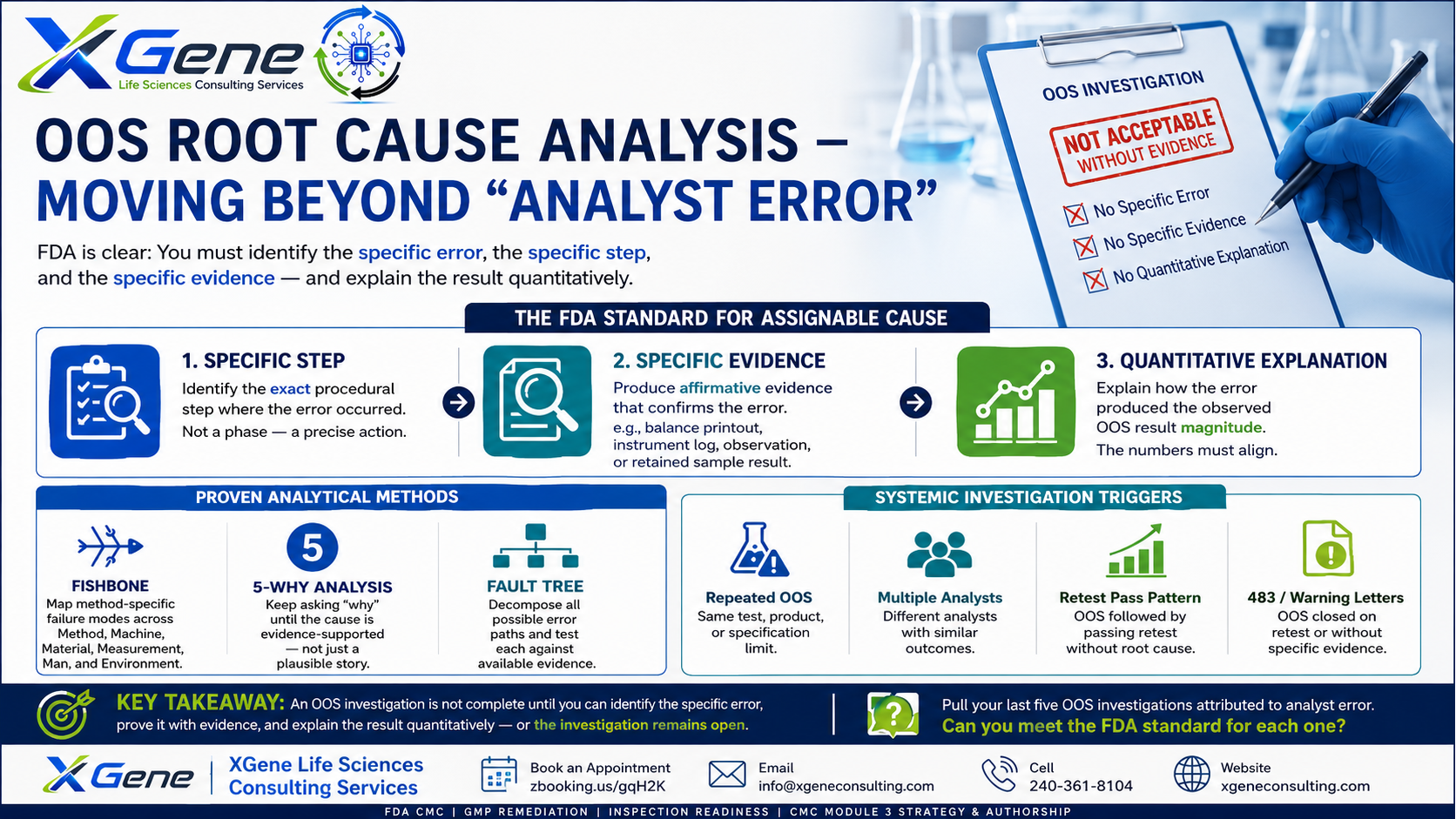
OOS Root Cause Analysis — Moving Beyond ‘Analyst Error’
"Analyst error" is not a root cause — it is a conclusion in search of evidence, and FDA’s May 2022 Level 2 revised OOS guidance is explicit that attributing an out-of-specification result to analyst
View details →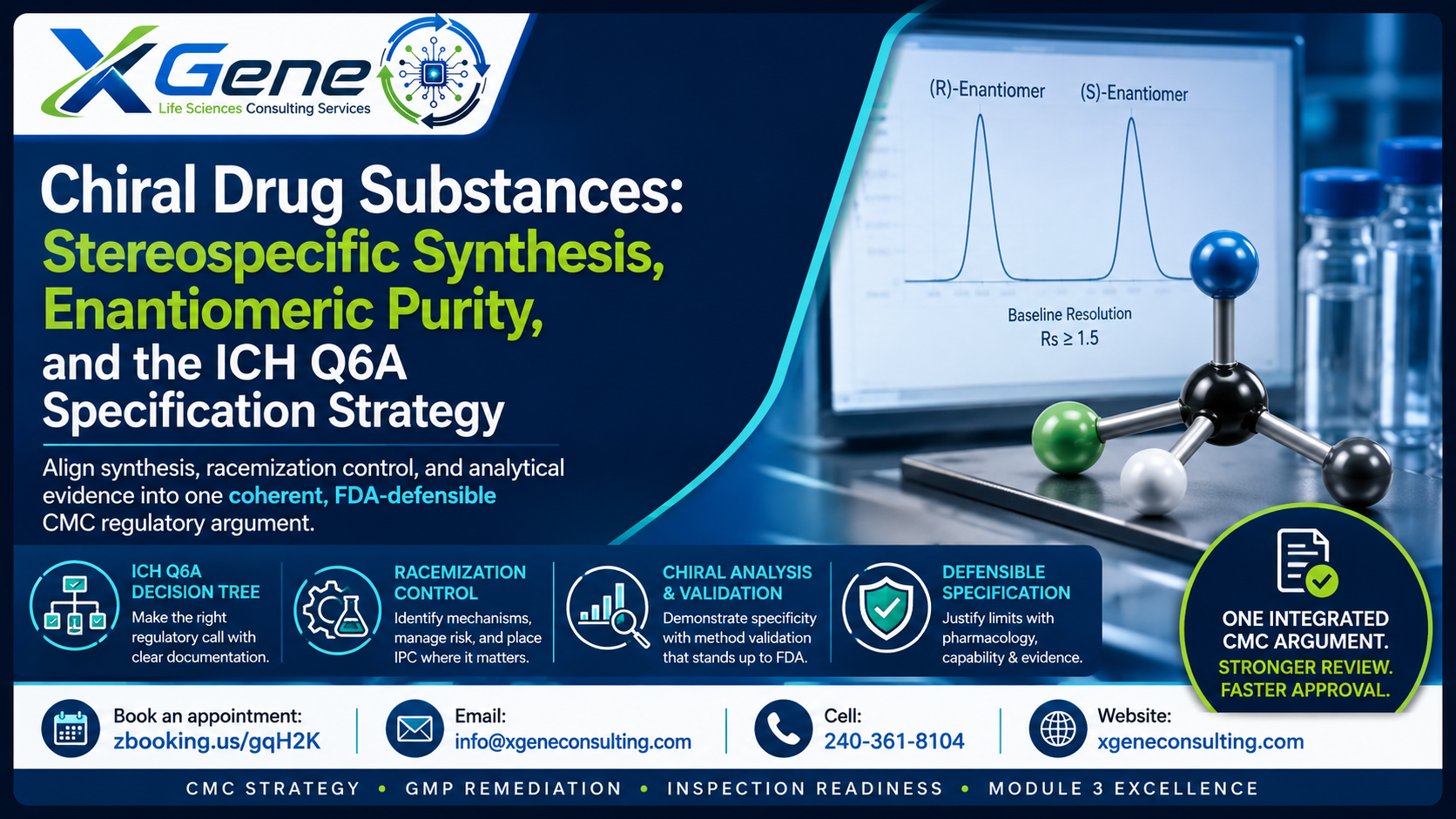
Chiral Drug Substances: Stereospecific Synthesis, Enantiomeric Purity, and the ICH Q6A Specification Strategy
More than half of the small molecule drugs approved by FDA in any given year contain at least one stereocenter. For most of those programs, the enantiomeric impurity is not just a quality parameter
View details →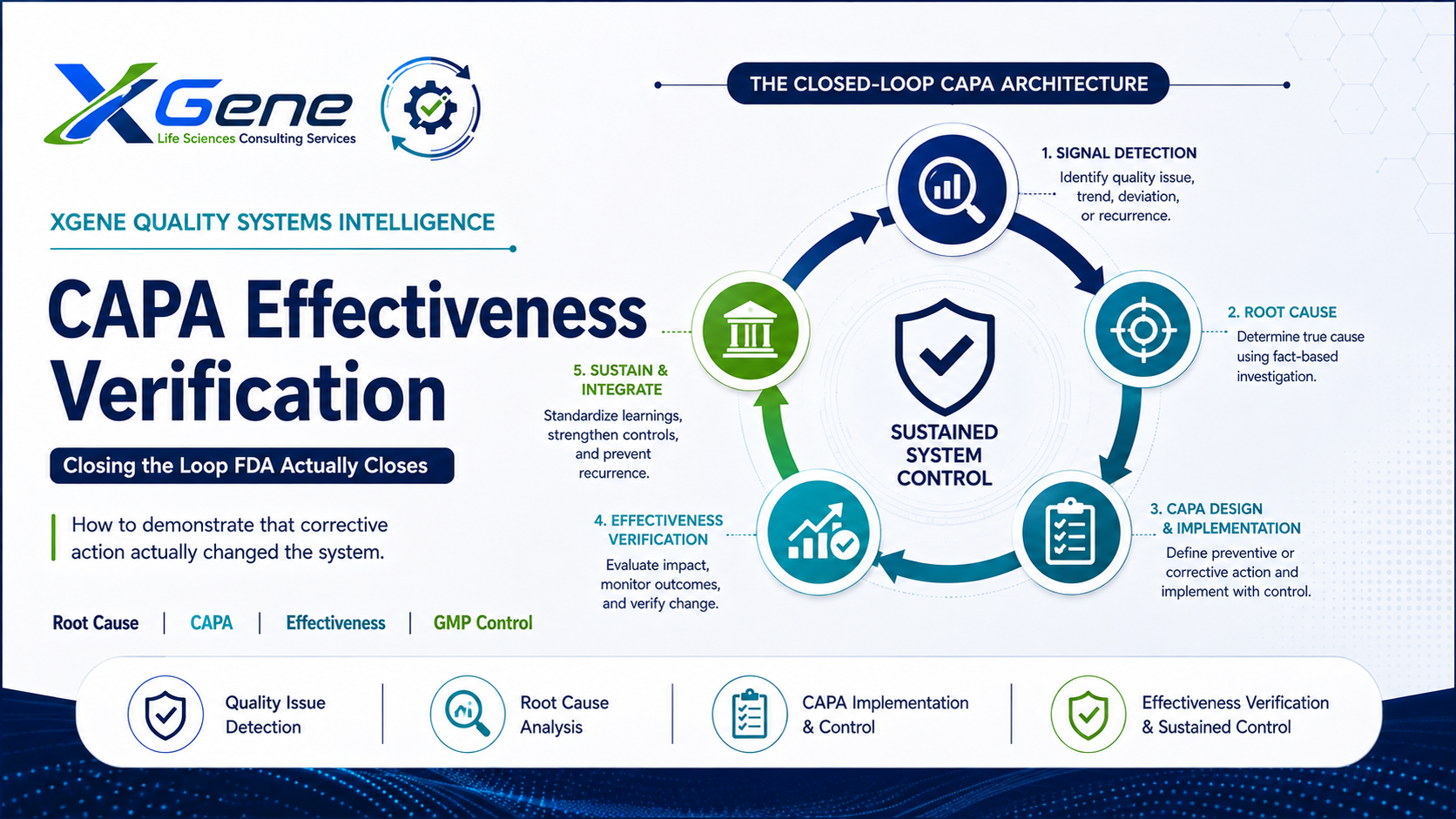
CAPA Effectiveness Verification — Closing the Loop FDA Actually Closes
An FDA investigator reviewing your CAPA system is not interested in how many CAPAs you have opened — they are interested in how many you have closed with demonstrated effectiveness, and the gap between
View details →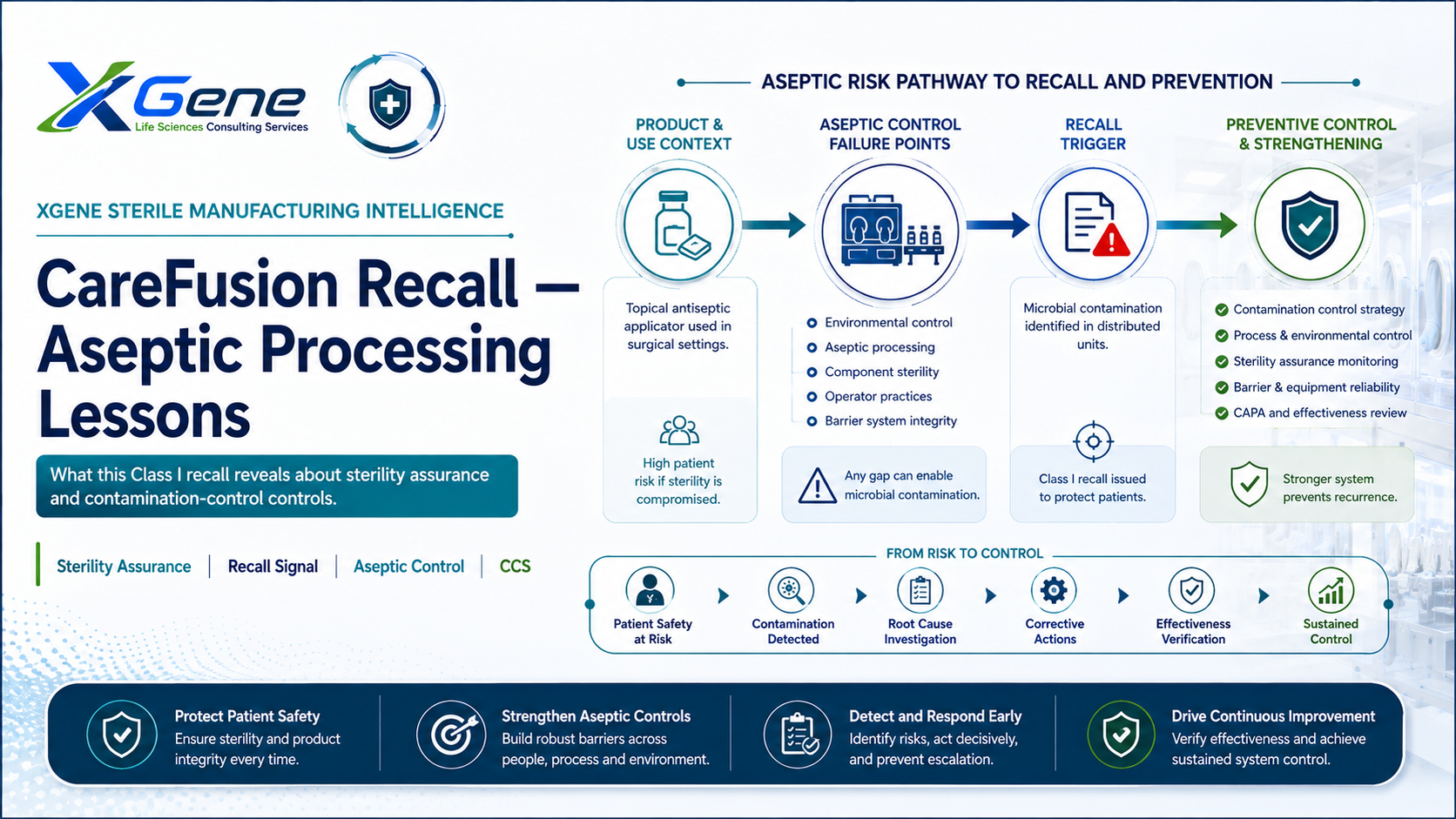
CareFusion 213, LLC (BD) Class I Recall — ChloraPrep Sterile Antiseptic Applicators: The Sterile Manufacturing System Failure Behind the Recall and What Every Aseptic Processing Director Must Address
CareFusion 213, LLC, a subsidiary of Becton, Dickinson and Company (BD), has recalled two configurations of its BD ChloraPrep One-Step and FREPP Clear sterile antiseptic applicators (2% w/v chlorhexidine gluconate and 70% v/v isopropyl
View details →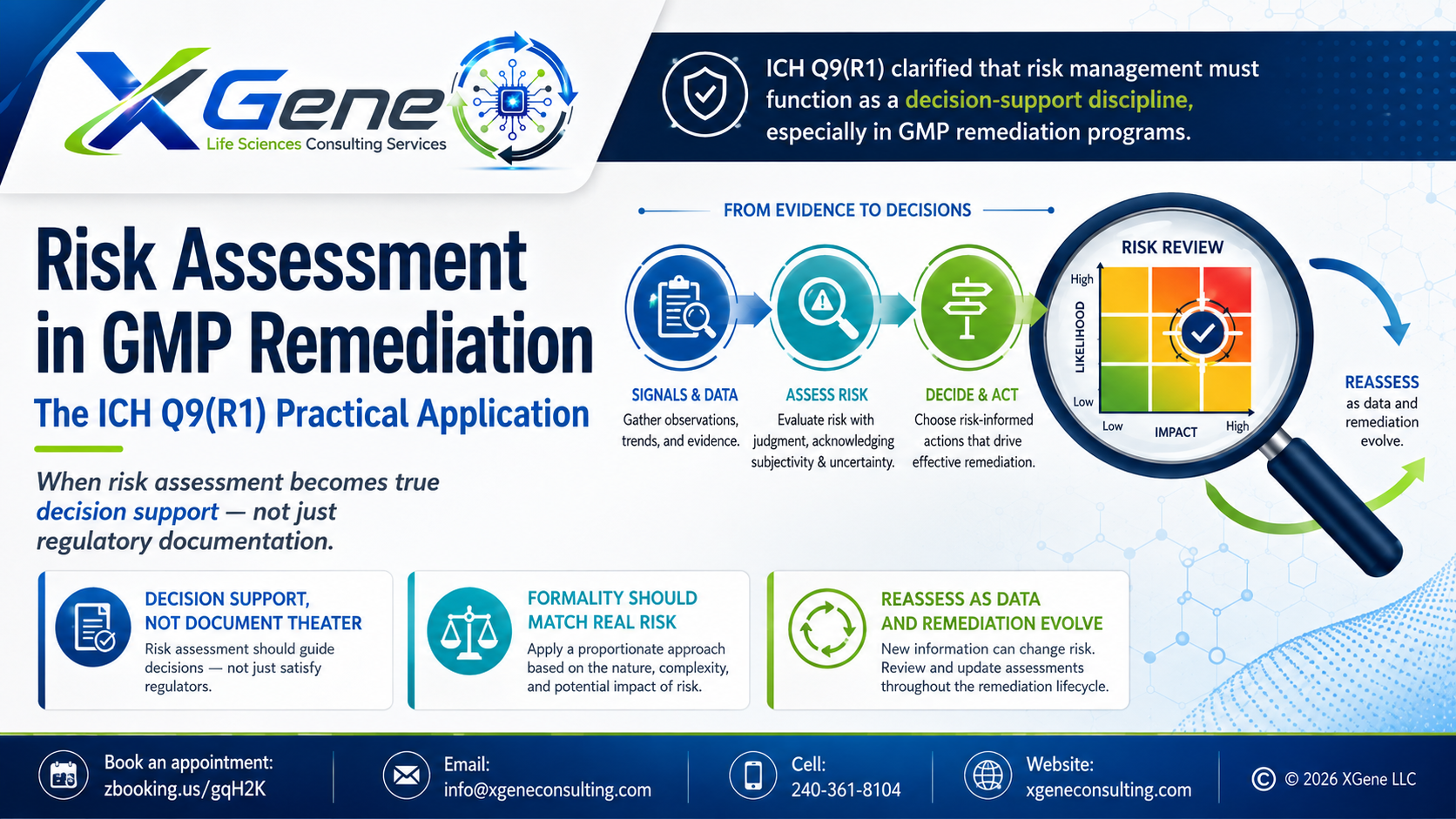
Risk Assessment in GMP Remediation — The ICH Q9 Practical Application
Most pharmaceutical quality risk assessments are produced in response to a regulatory request rather than to support a genuine decision — and the difference is immediately visible to an FDA reviewer who reads dozens
View details →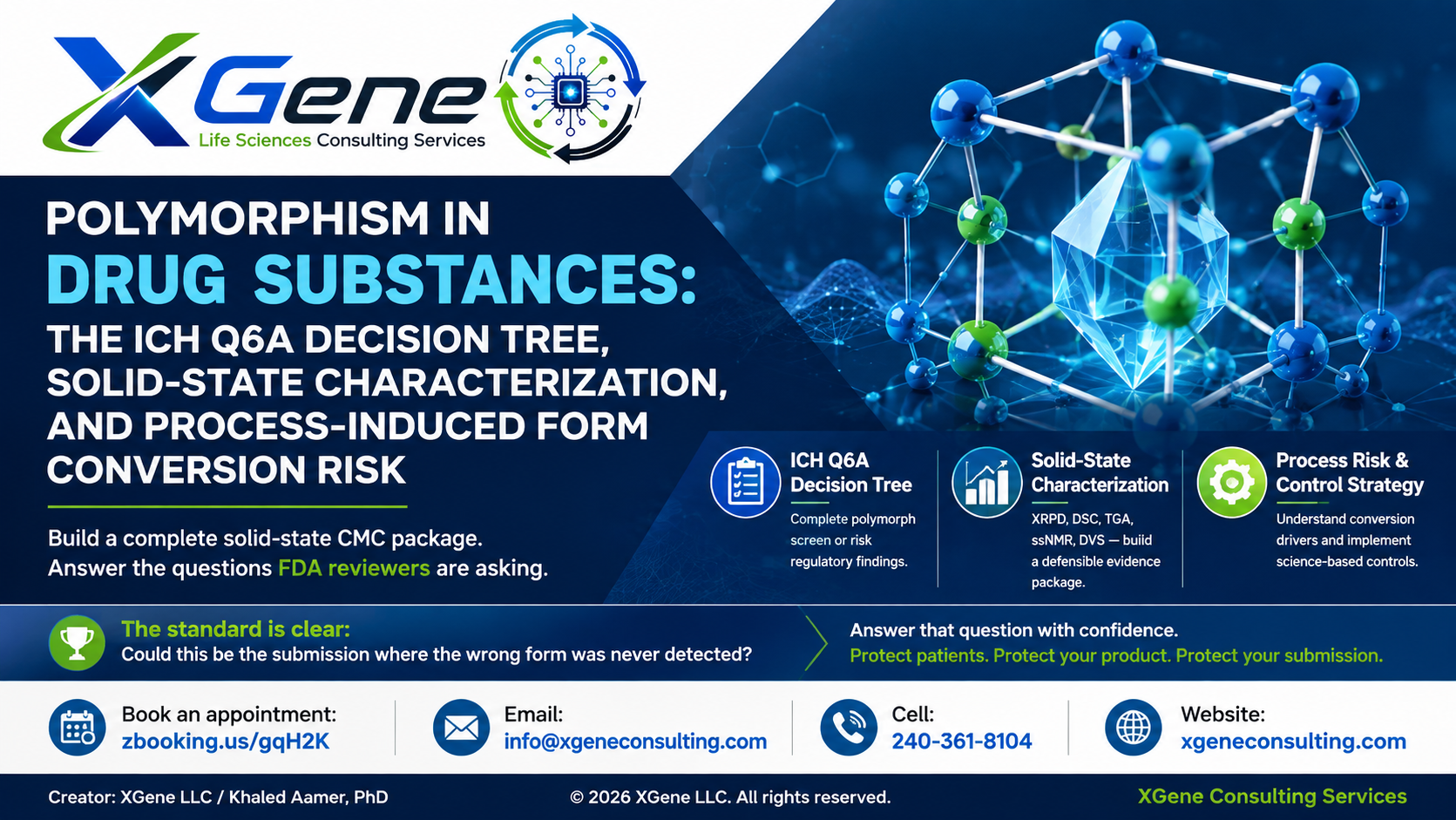
Polymorphism in Drug Substances: The ICH Q6A Decision Tree, Solid-State Characterization, and Process-Induced Form Conversion Risk
A drug substance that exists as multiple crystalline forms — differing in lattice structure, thermodynamic stability, and solubility — is not an unusual compound. It is the majority of small molecule APIs. The regulatory
View details →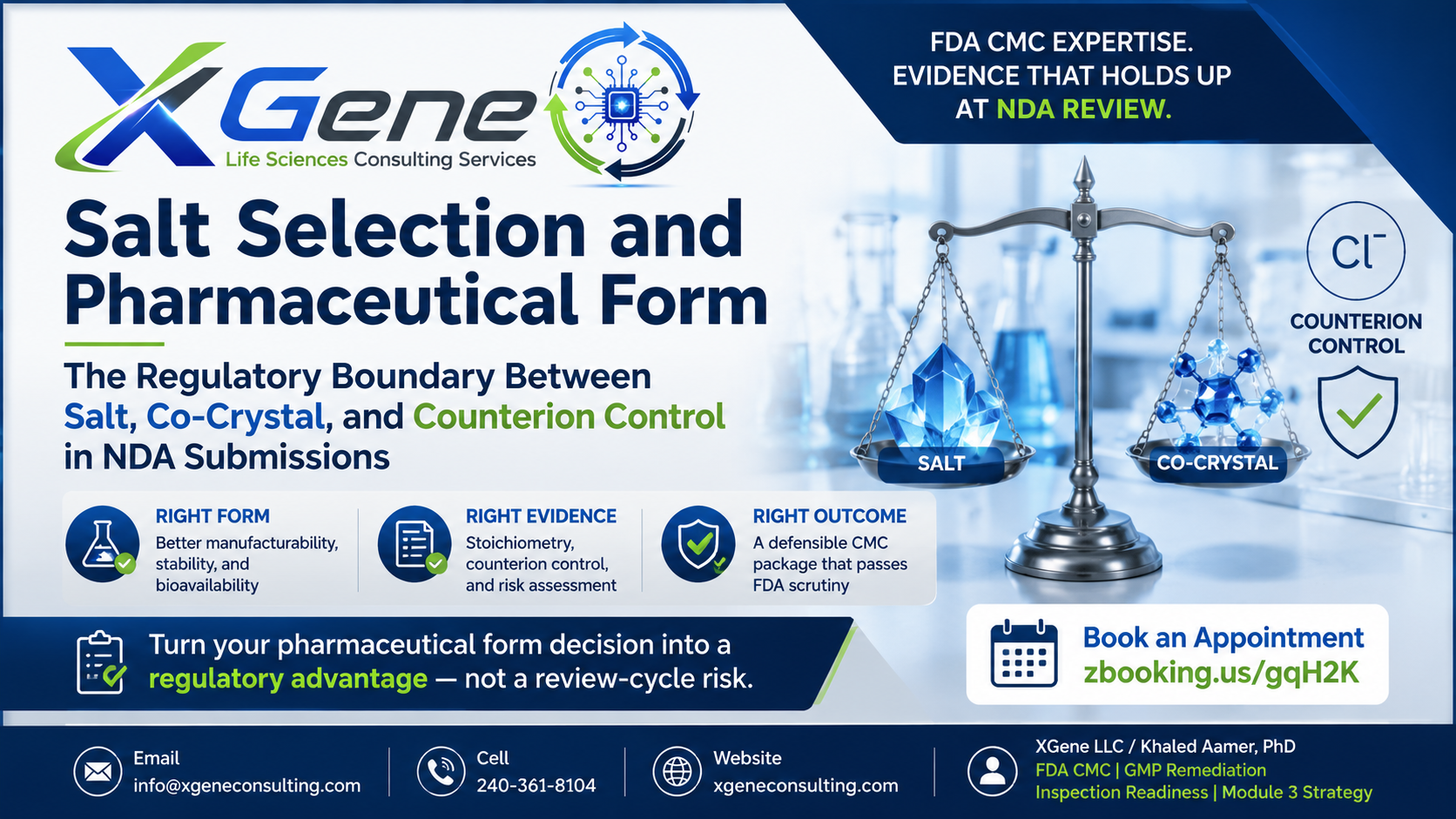
Salt and Co-Crystal Selection: CMC Documentation of Pharmaceutical Form Decisions in Module 3
Salt selection is the first CMC decision that determines whether your drug will be manufacturable, stable, and bioavailable — and it is a decision made before most of the regulatory framework that will eventually
View details →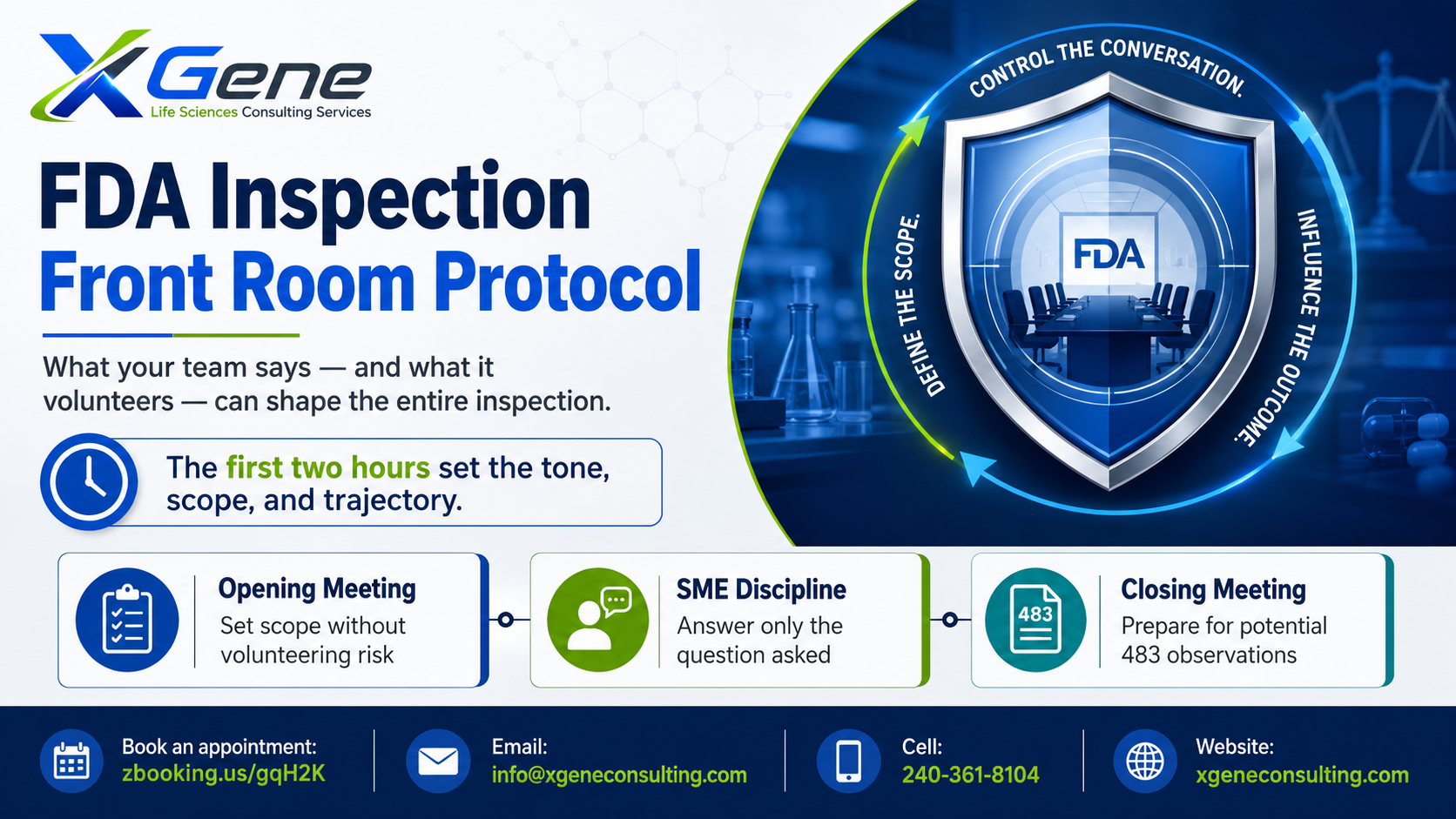
FDA Inspection Front Room Protocol — What to Say and What Not To
The most consequential decisions during an FDA inspection are not made in the laboratory or on the manufacturing floor — they are made in the first two hours in the front room, when the
View details →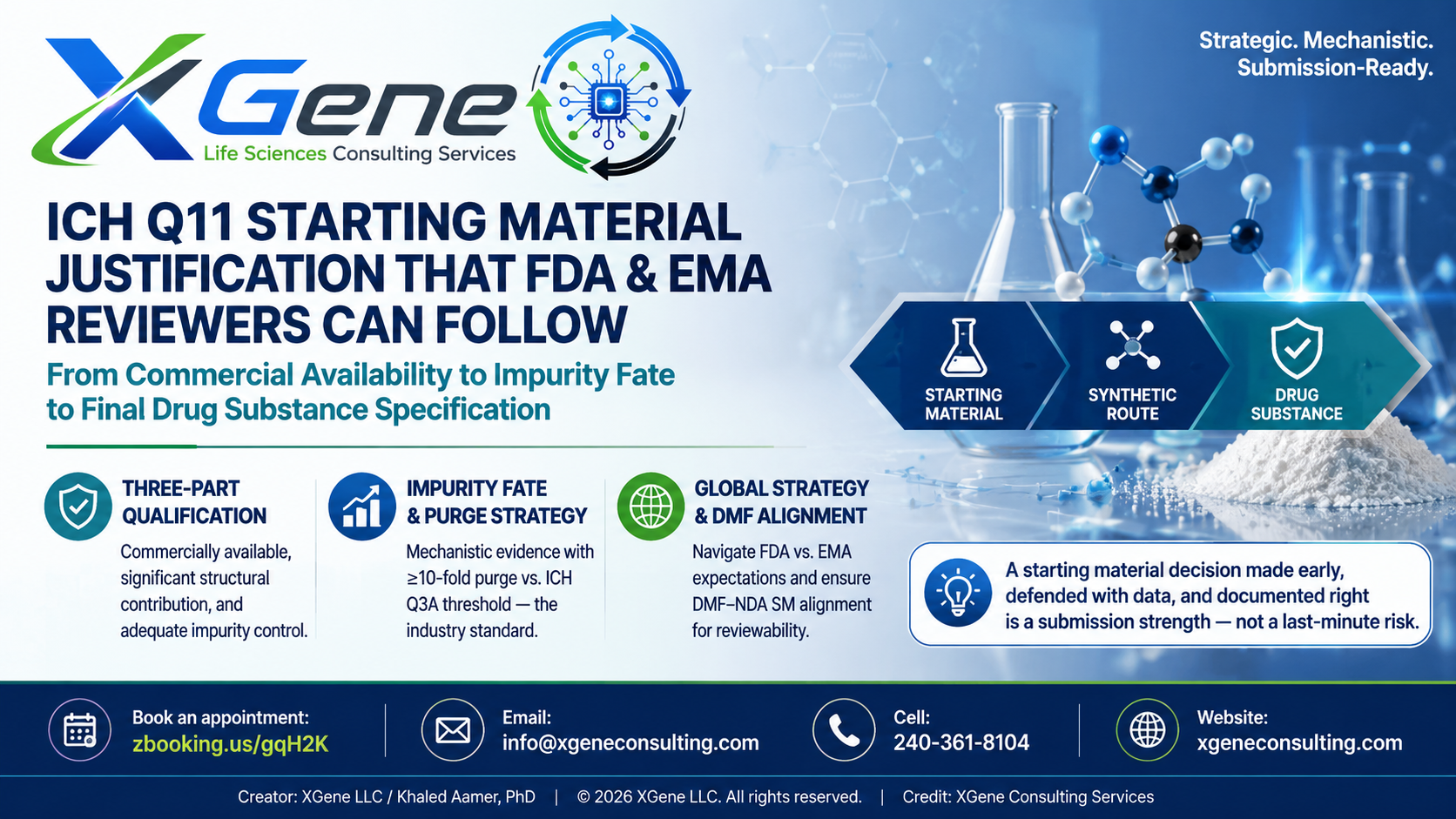
The ICH Q11 Three-Part Justification — What FDA and EMA Require for Starting Material Designation and Where Programs Fall Short
The starting material designation in a drug substance synthesis is one of the highest-stakes decisions in small molecule CMC development — and it is made years before the NDA submission by chemists who may
View details →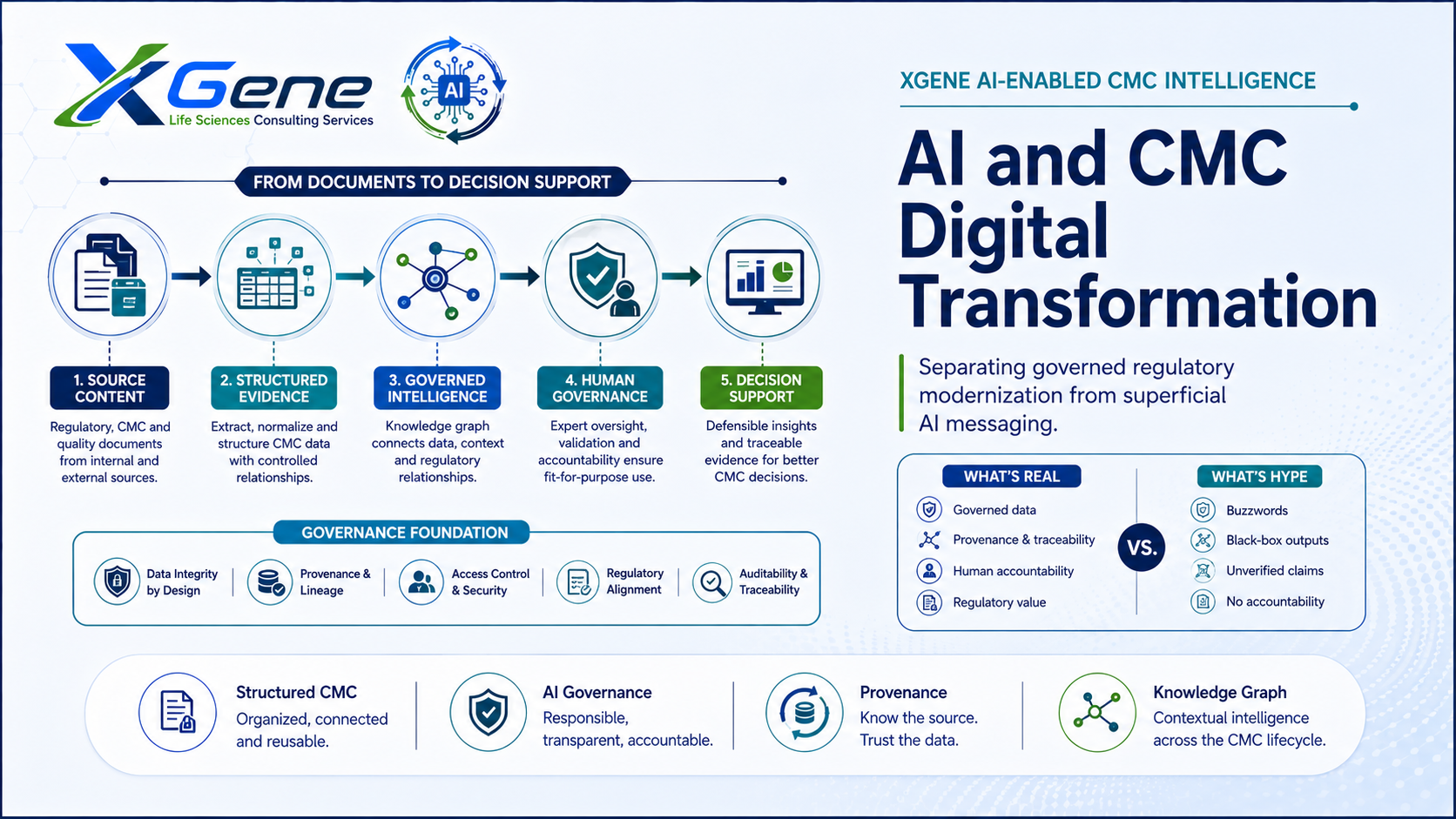
AI and CMC Digital Transformation — What’s Real and What’s Hype
Every pharmaceutical conference in the past two years has featured a presentation claiming that AI will transform CMC development and regulatory review — almost none of them have explained which specific AI applications are
View details →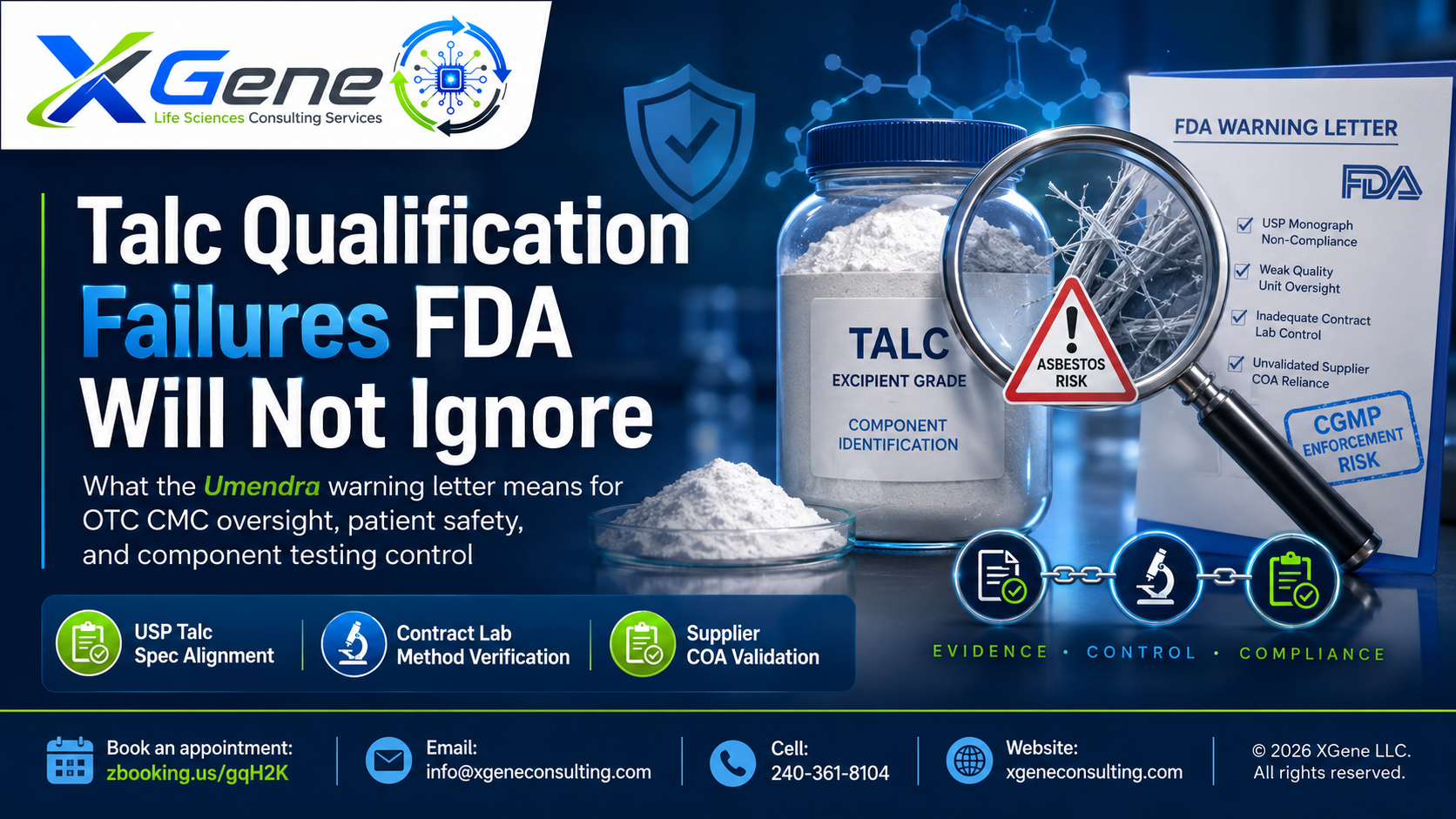
Umendra Life Sciences Warning Letter: Component Testing Failures and the Talc-Asbestos Risk Every OTC CMC Director Must Recognize
On June 2, 2026, FDA issued Warning Letter 320-26-91 to Umendra Life Sciences Private Limited, an OTC drug product manufacturer located in Bavla, Ahmedabad, Gujarat, India, citing systemic failures in incoming component testing and
View details →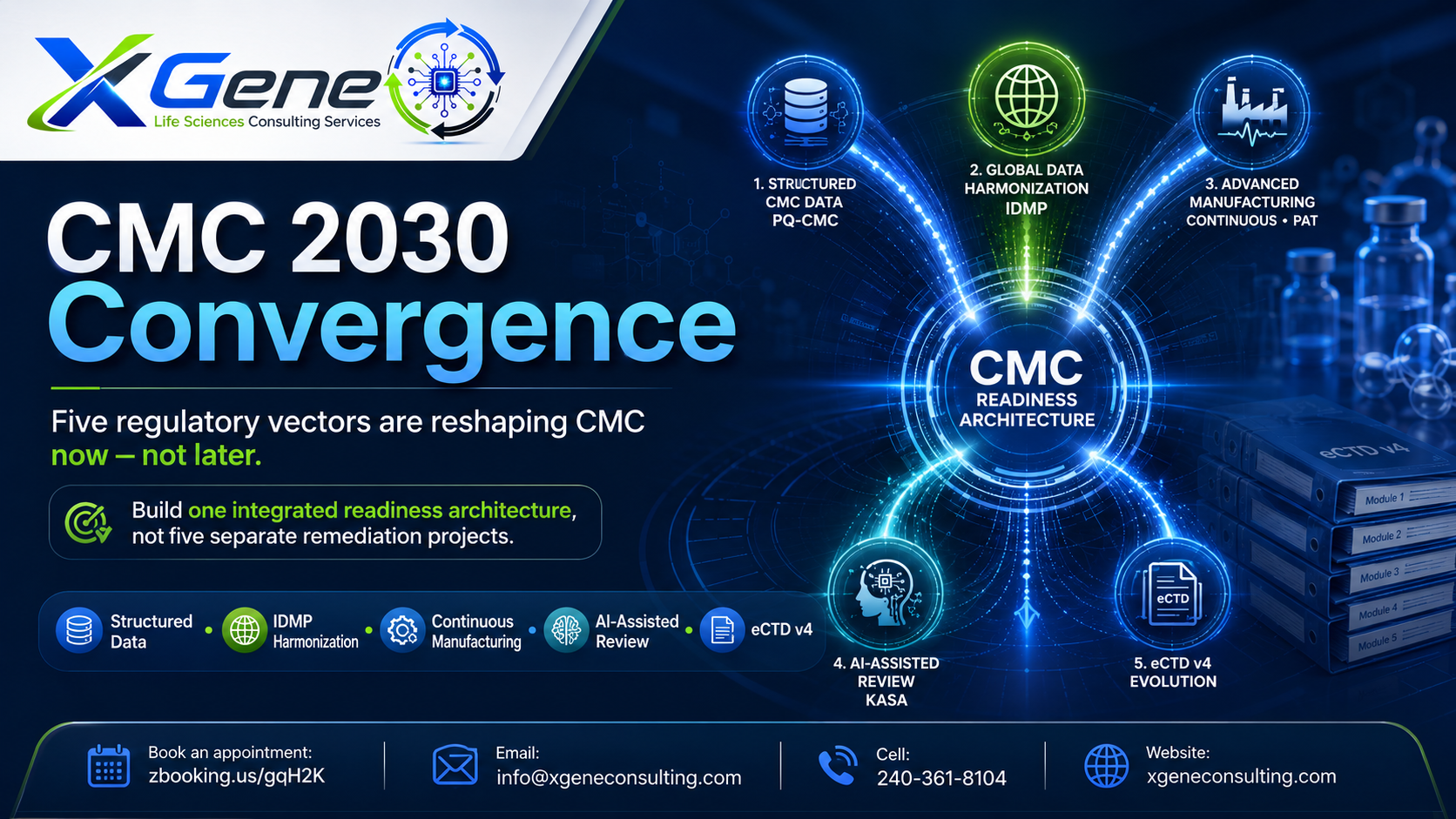
CMC 2030 Convergence — Where the Regulatory Landscape Is Heading
The CMC regulatory landscape in 2030 will be defined by three converging forces that are already in motion today: structured data submission as the default for all major agencies, AI-assisted review as standard FDA
View details →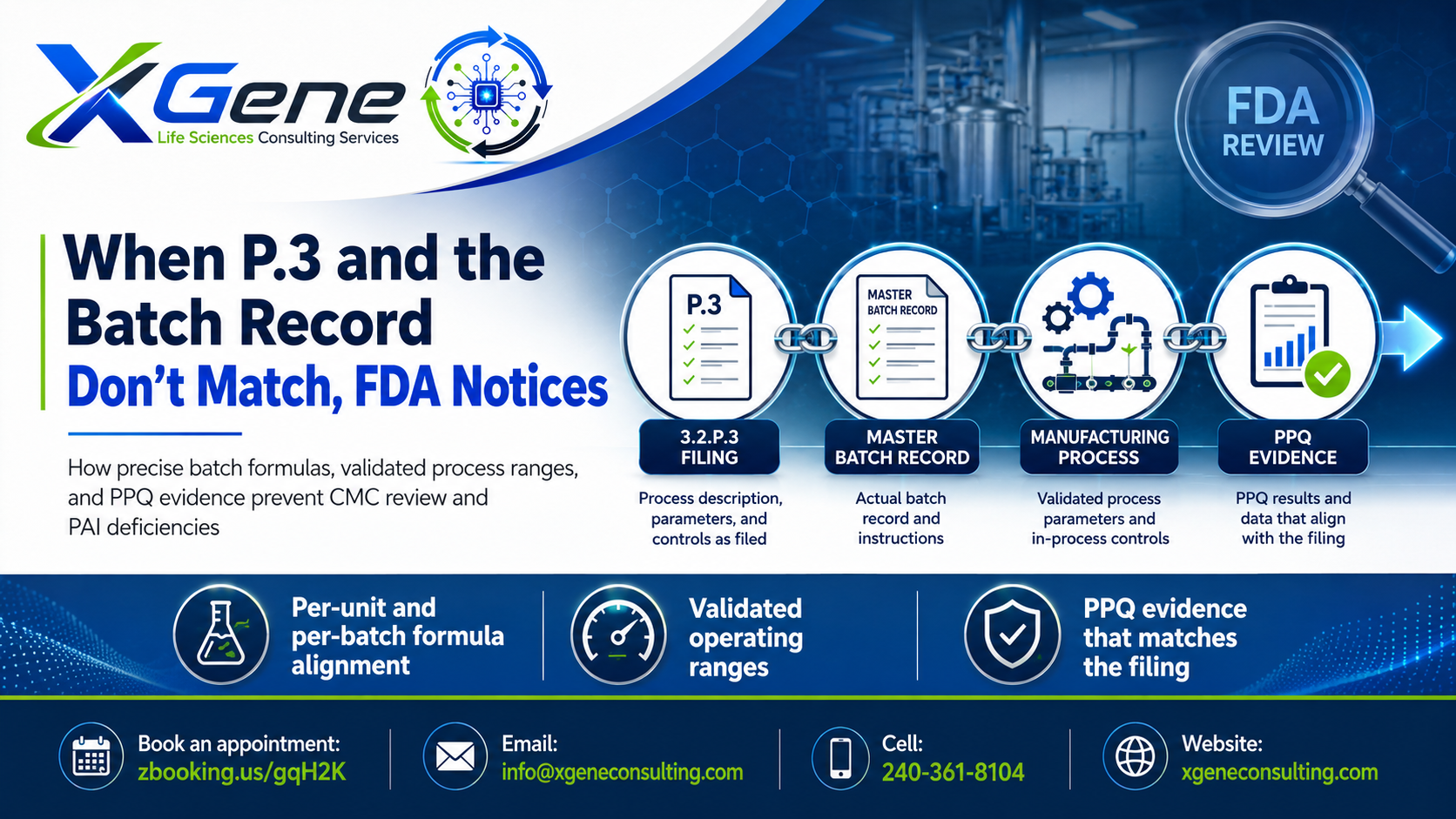
3.2.P.3 Drug Product Manufacture: Batch Formula, Process Description, and Validation Evidence That Survives FDA Review
The most common manufacturing-related CMC information request FDA issues for drug product applications is not about batch failure — it is about the gap between the process description in the filing and the actual
View details →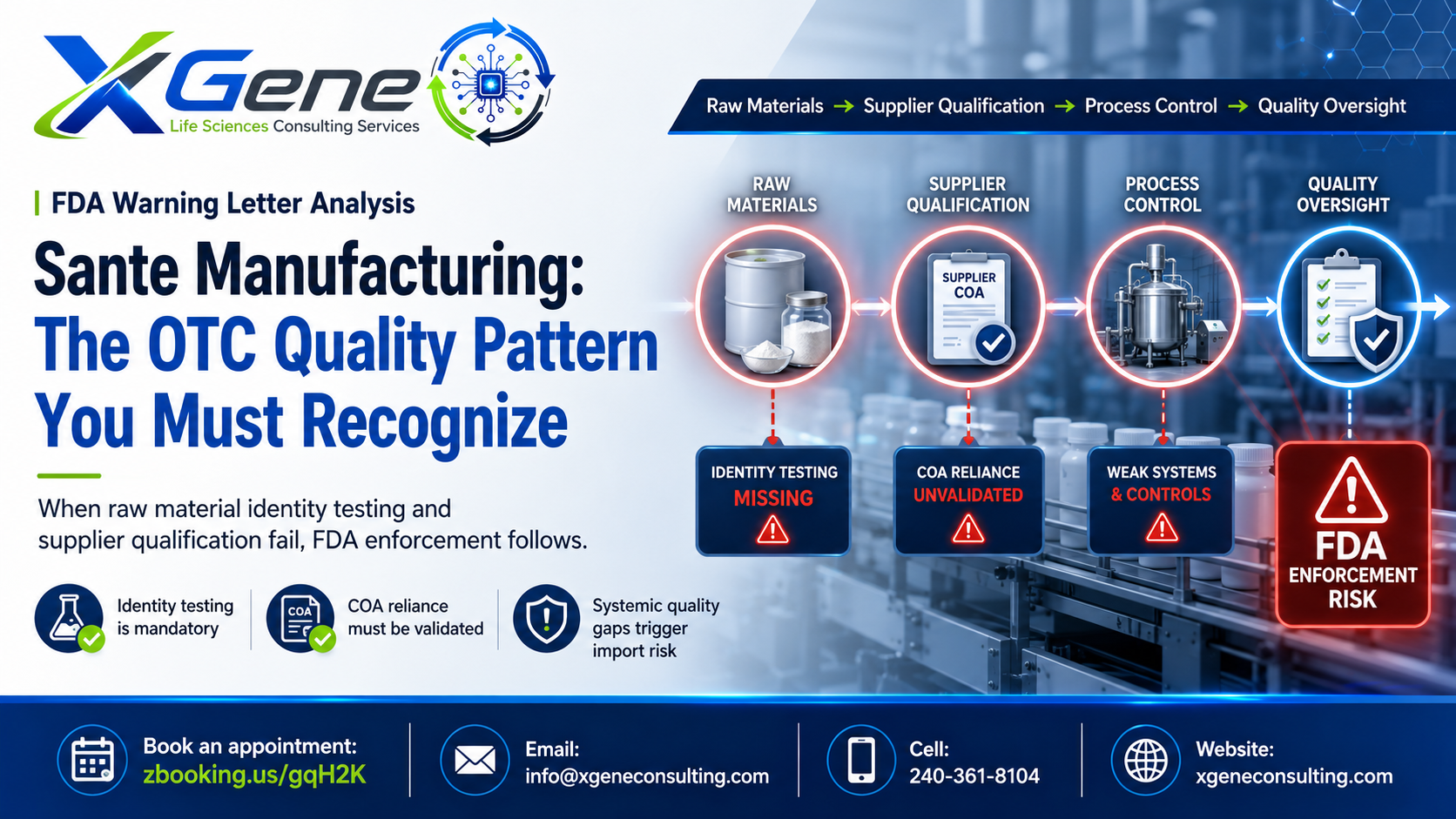
Sante Manufacturing Inc. Warning Letter: Raw Material Identity and Supplier Qualification Failures and the CMC Pattern Every OTC Drug Quality Director Must Recognize
On June 5, 2026, FDA issued Warning Letter 320-26-94 to Sante Manufacturing Inc., an over-the-counter drug product manufacturer located at 516 John Street N, Aylmer, Ontario, Canada. The letter, issued by the Center for
View details →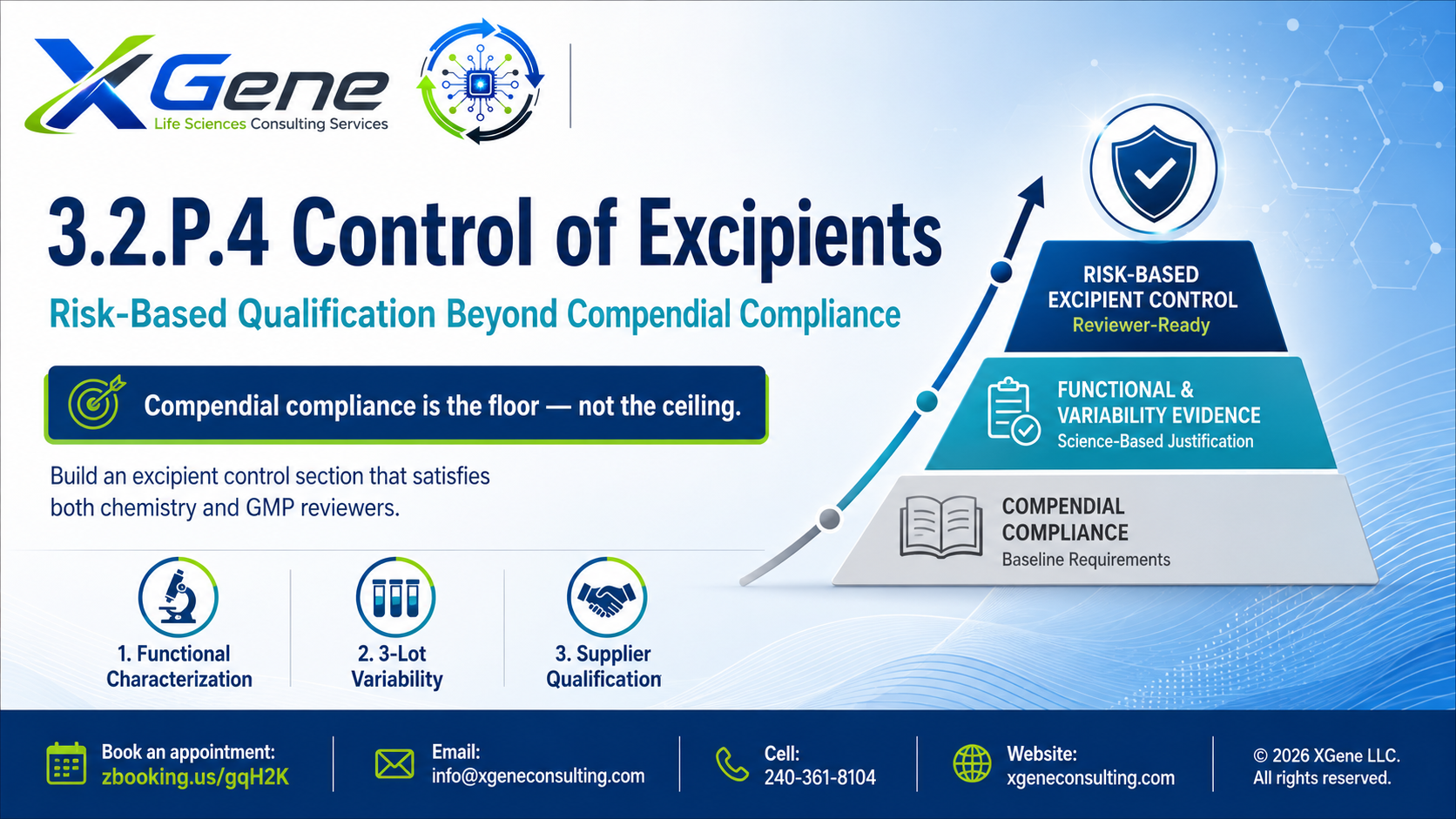
3.2.P.4 Control of Excipients: Risk-Based Qualification That Goes Beyond Compendial Compliance
"The answer 'the excipient complies with USP/EP' satisfies the basic identification and quality requirement in 3.2.P.4 — and it is the answer that generates the follow-up deficiency 'please provide the functional characterization data and
View details →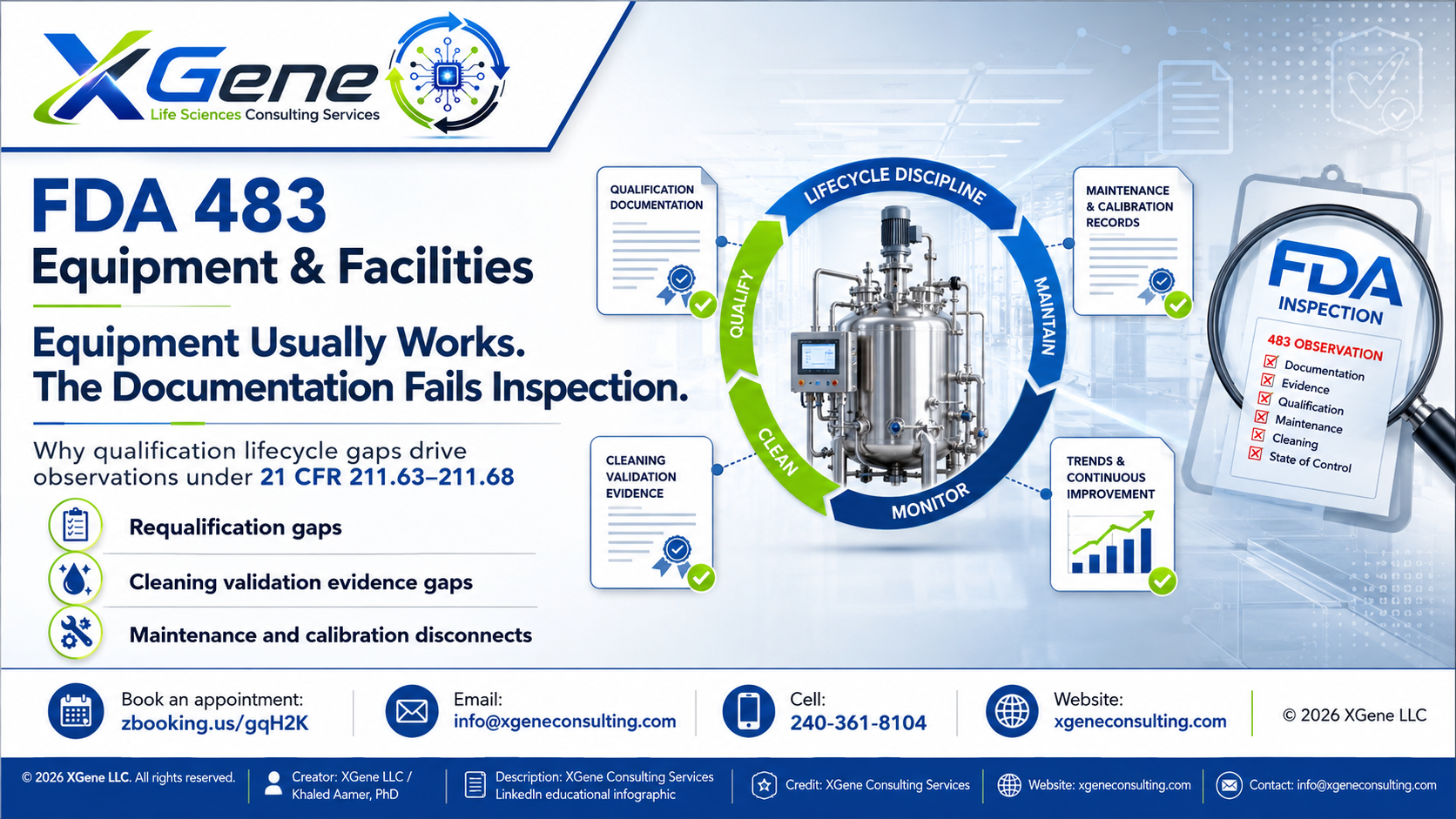
FDA 483 Equipment and Facilities — What Inspectors Actually Document
FDA equipment and facilities 483 observations are rarely about whether the equipment works — they are almost always about whether the documentation demonstrates that the equipment has been qualified, maintained, and cleaned in a
View details →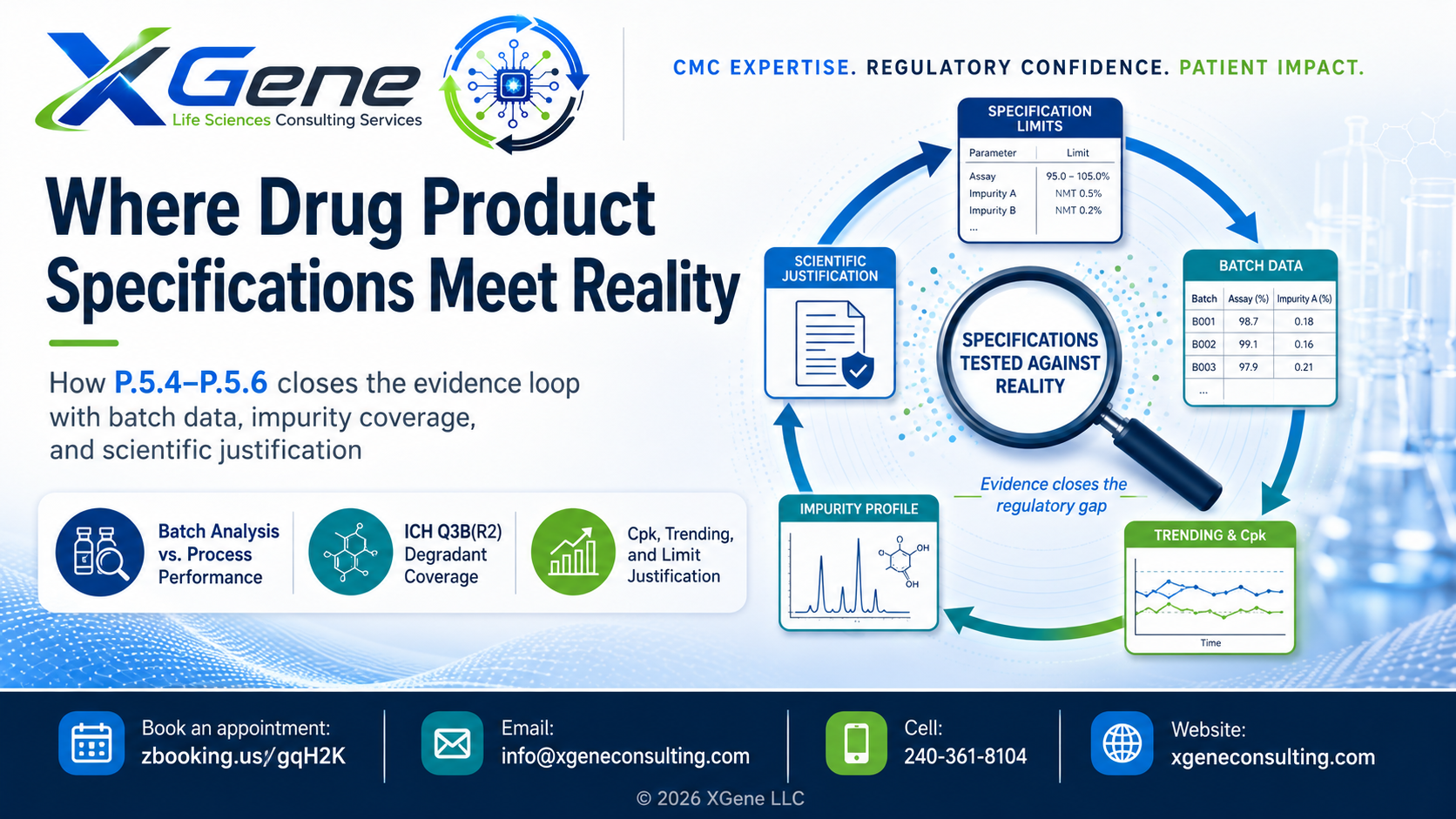
3.2.P.5.4–5.6 Batch Analyses, Drug Product Impurities, and Justification of Specification: Closing the Evidence Loop
Sections 3.2.P.5.4, 5.5, and 5.6 are where the drug product specification is tested against reality. The batch analysis data must demonstrate that the process reliably meets the specification; the impurity discussion must account for
View details →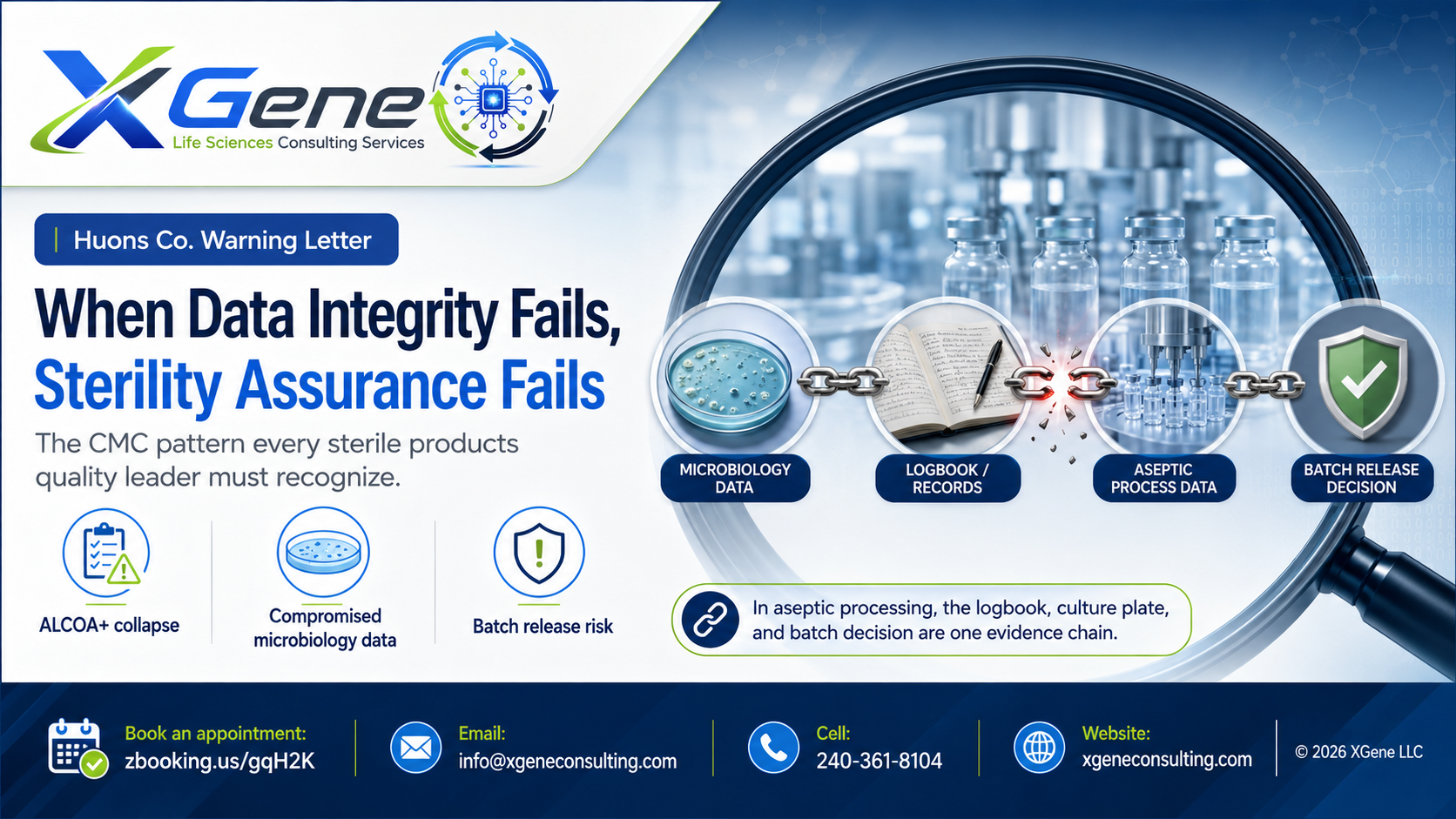
Huons Co. Warning Letter: Data Integrity and the CMC Pattern Every Sterile Products Quality Director Must Recognize
On June 15, 2026, FDA issued Warning Letter 320-26-95 to Huons Co., Ltd., a drug manufacturing facility located at 100 Bio Valley-ro, Jecheon, Chungcheongbuk, South Korea, citing systemic data integrity violations following an inspection
View details →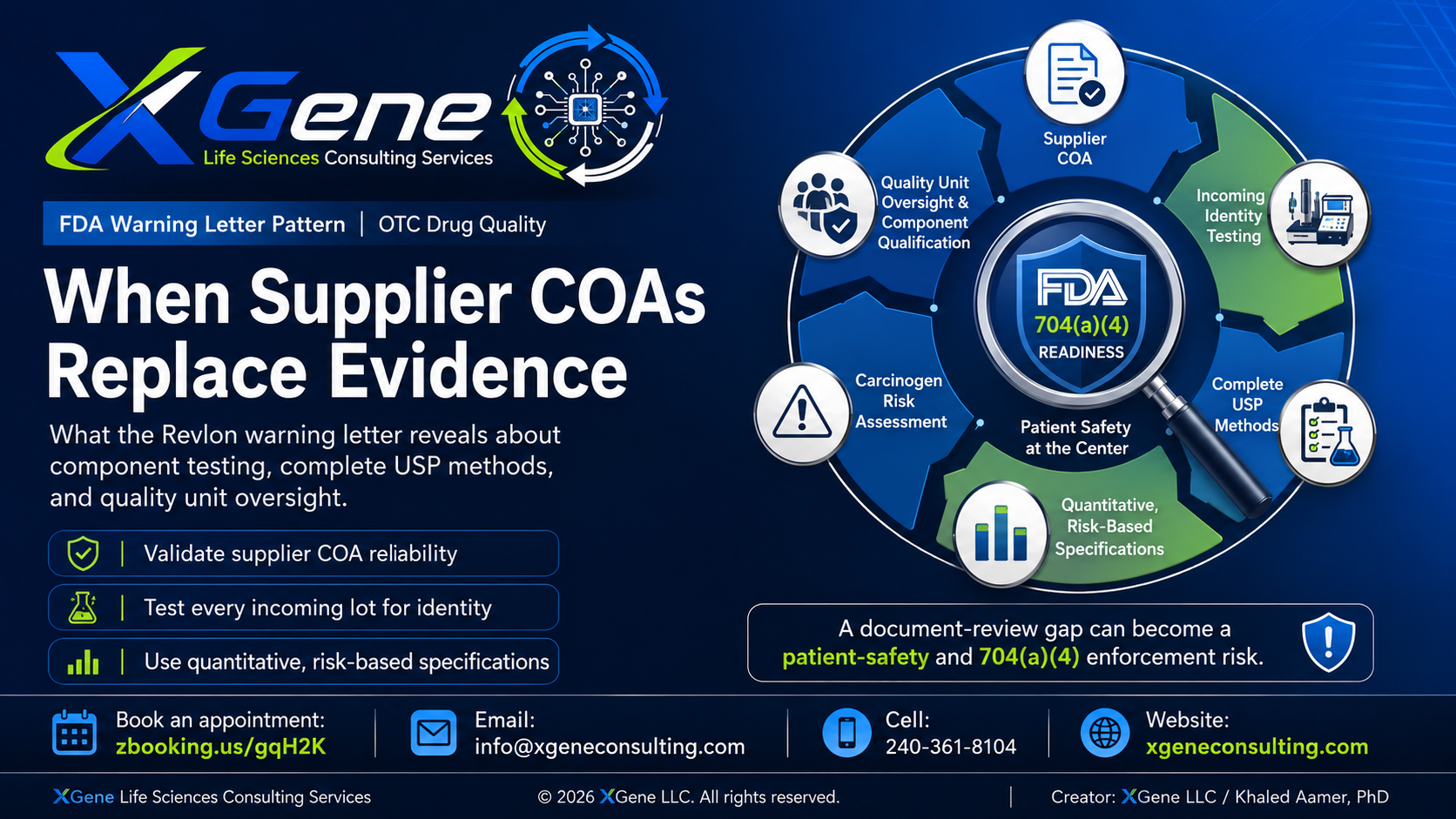
Revlon Group Holdings Warning Letter: Component Testing and Laboratory Controls Failures and the CMC Pattern Every OTC Drug Quality Director Must Recognize
On June 2, 2026, FDA issued Warning Letter 320-26-89 to Revlon Group Holdings, LLC at its Oxford, North Carolina facility — a registered OTC drug product manufacturer — citing significant violations of Current Good
View details →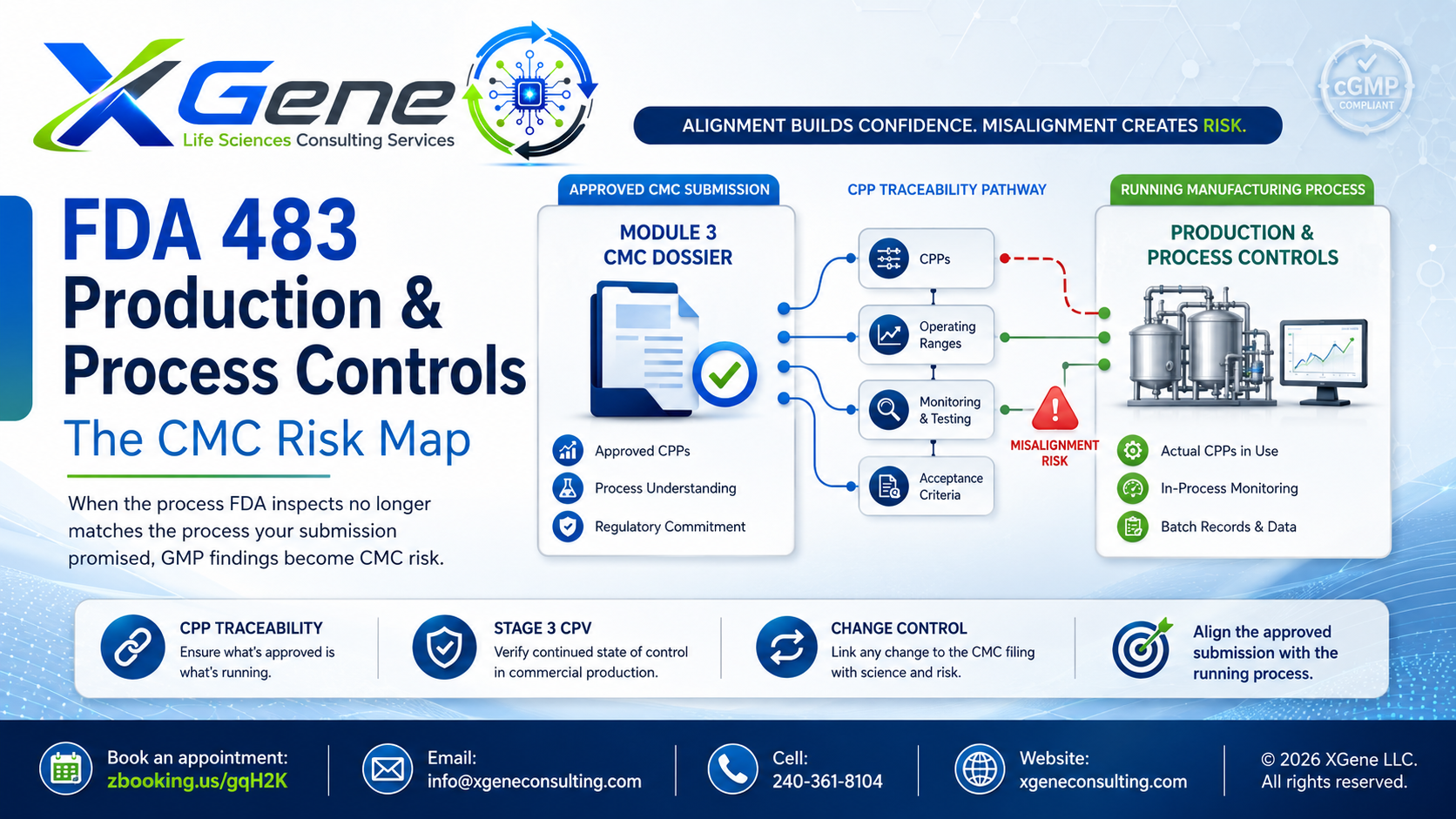
FDA 483 Production and Process Controls — The CMC Risk Map
Production and process controls 483 observations are the category where FDA's regulatory findings intersect most directly with your CMC submission — because the process controls FDA finds inadequate in your facility are almost always
View details →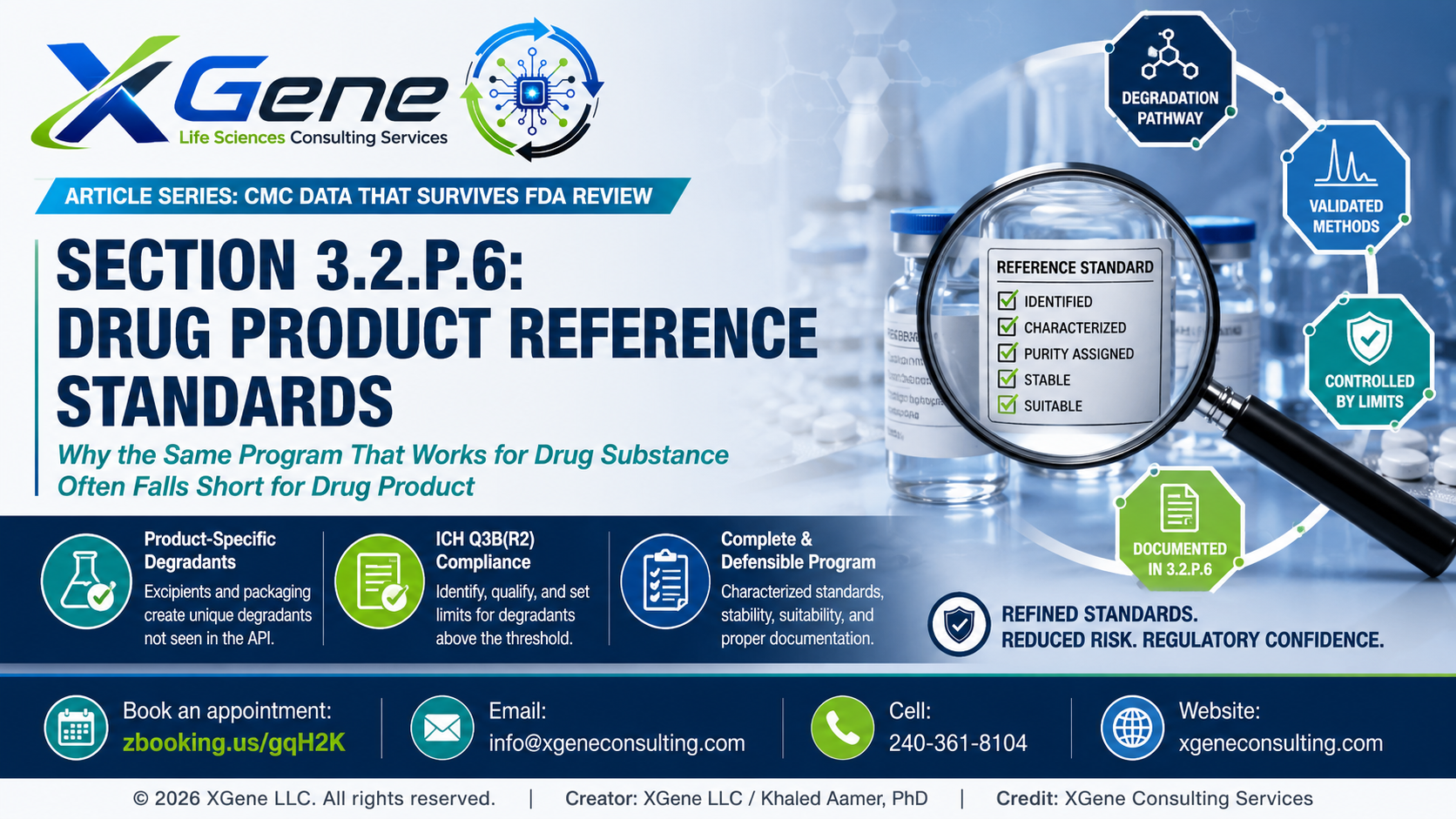
3.2.P.6 Drug Product Reference Standards: Why the Same Program That Works for Drug Substance Often Falls Short for Drug Product
The cross-reference to 3.2.S.5 is not wrong. For the assay reference standard — the characterized primary standard used to quantify drug substance content in finished tablets, capsules, or solutions — the drug substance program
View details →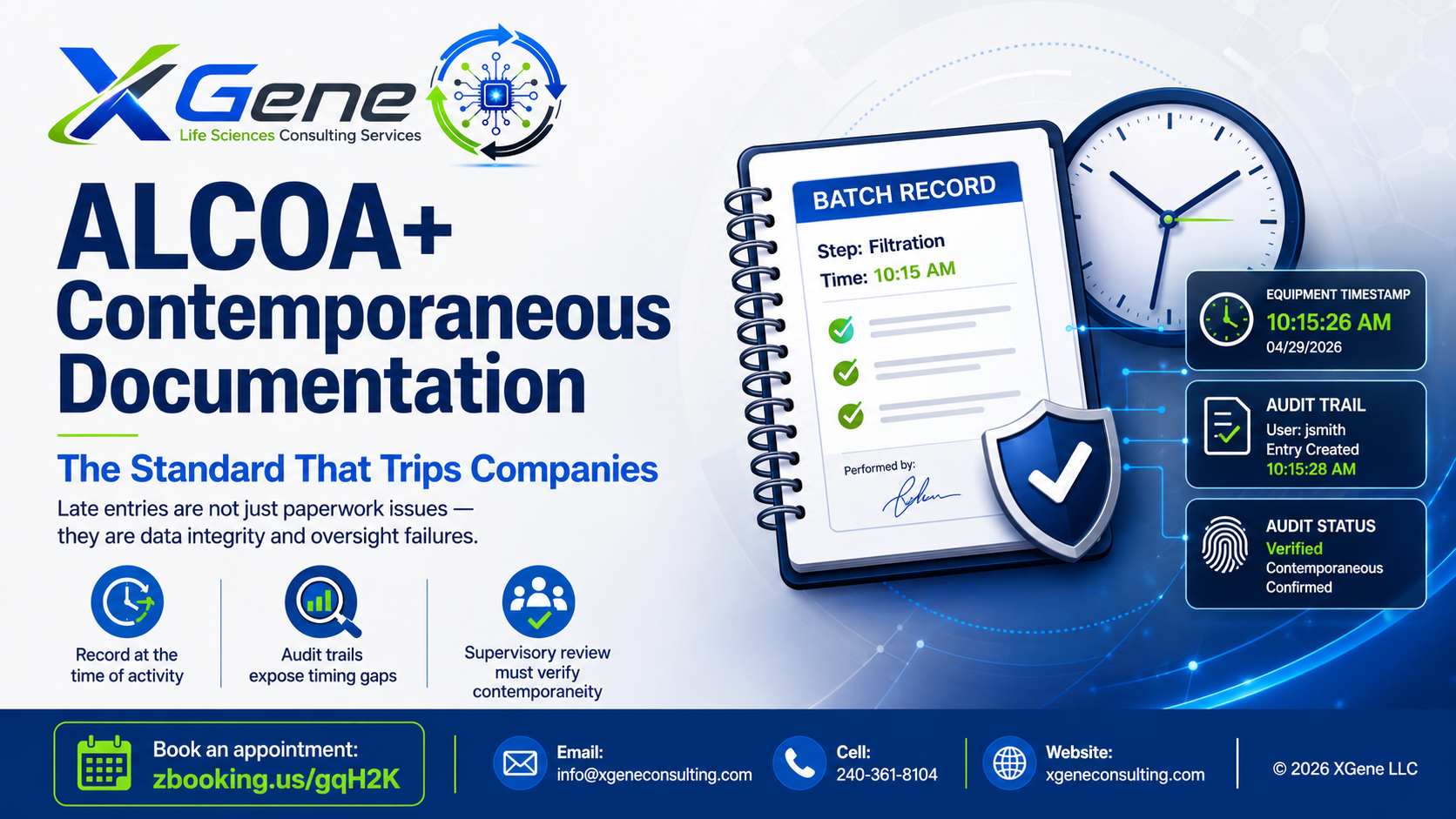
ALCOA+ Contemporaneous Documentation — The Standard That Trips Companies
Of all the ALCOA+ principles, contemporaneous documentation is the one that generates the most Warning Letters — not because companies are falsifying records, but because decades of informal documentation practices have normalized the idea
View details →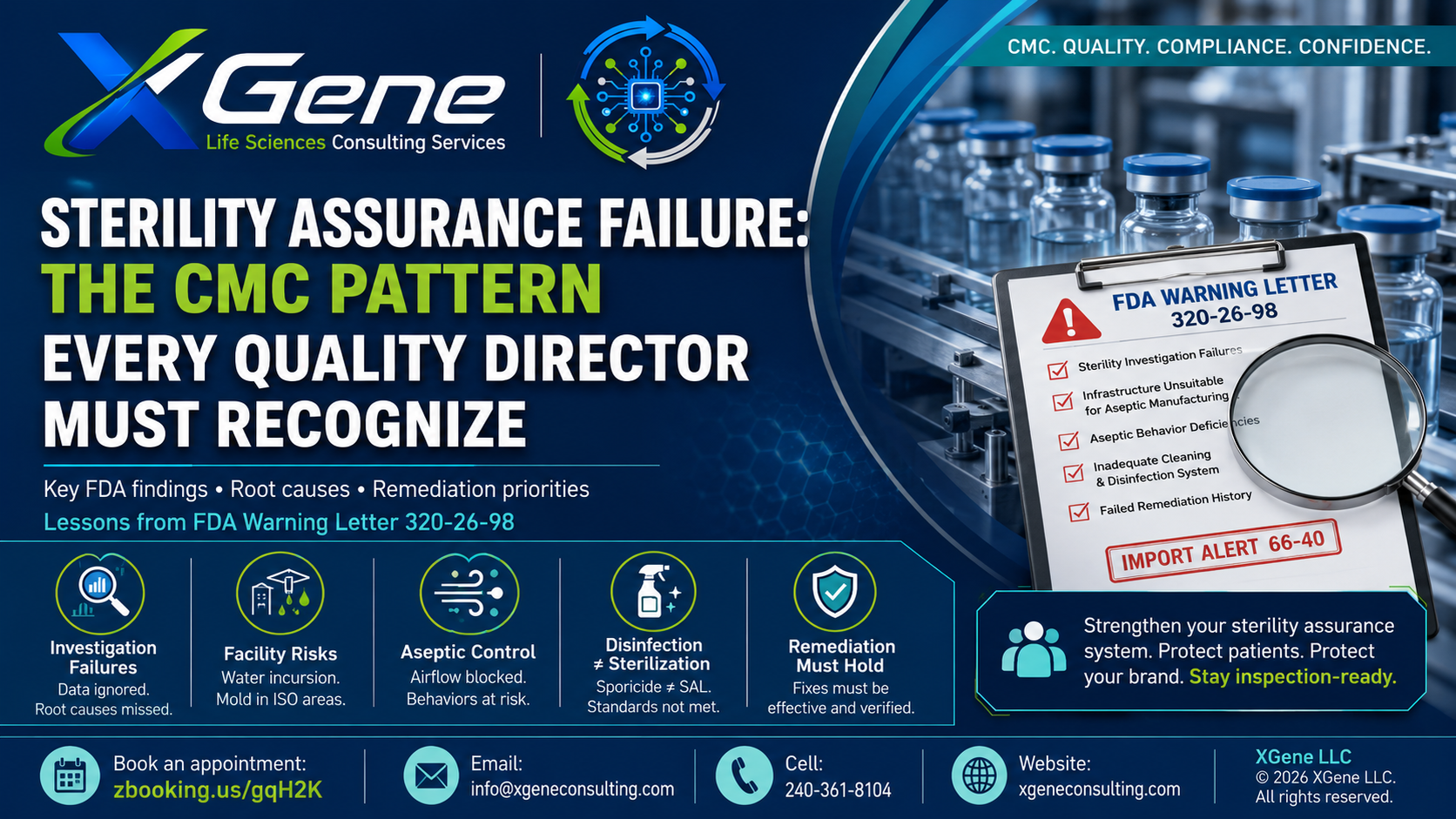
Excelvision Warning Letter: Sterility Assurance Failure and the CMC Pattern Every Sterile Products Quality Director Must Recognize
On June 25, 2026, FDA issued Warning Letter 320-26-98 to Excelvision (a Fareva facility) in Annonay, France, following an inspection conducted January 12 to 22, 2026 — the second warning letter this site has
View details →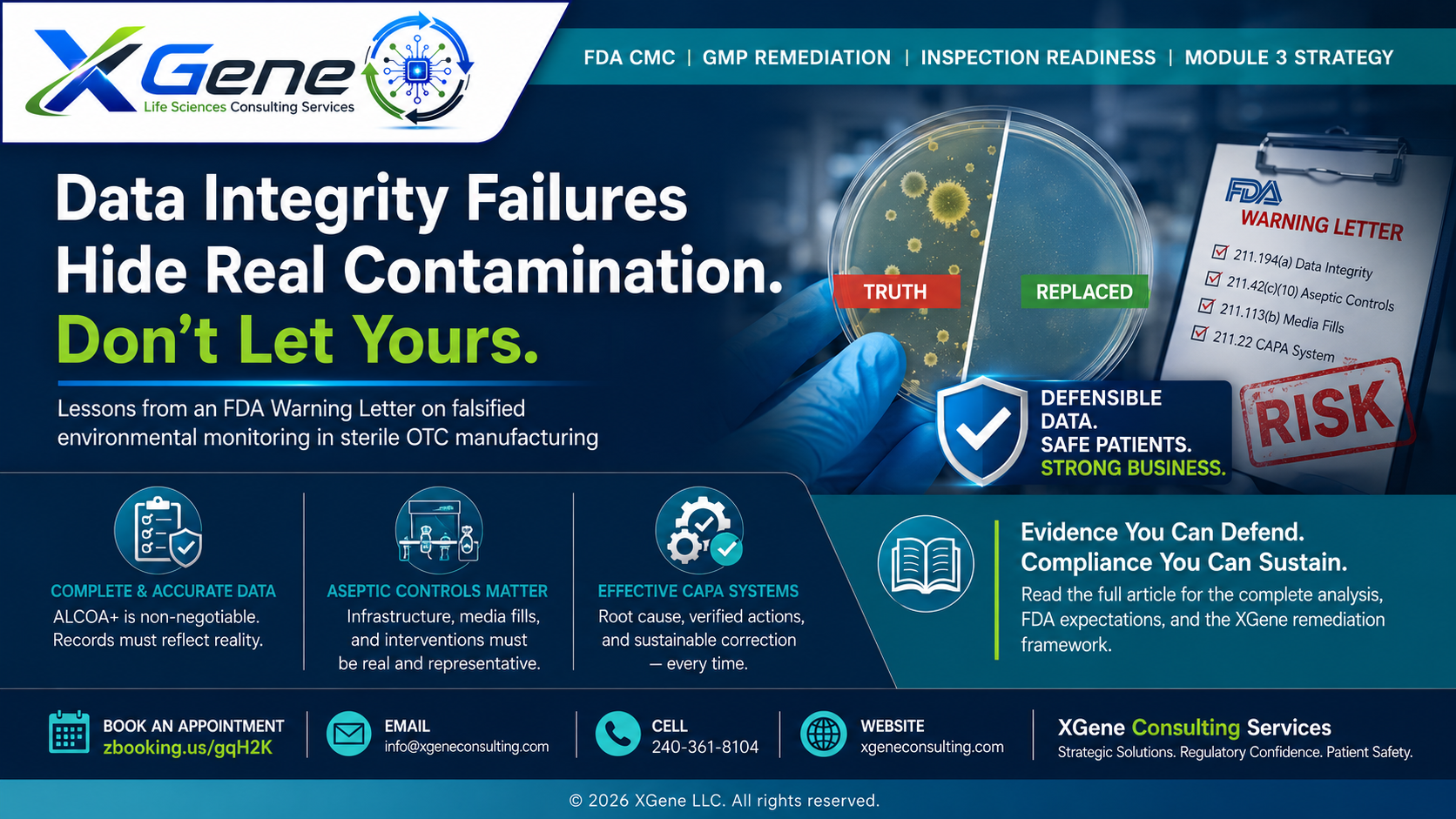
Wizcure Pharmaa Warning Letter: Data Integrity and the CMC Pattern Every Sterile OTC Drug Quality Director Must Recognize
On June 24, 2026, FDA issued Warning Letter 320-26-97 to Wizcure Pharmaa Private Limited in Bhiwadi, Rajasthan, India, following an inspection conducted December 3 to 10, 2025 — a ten-day inspection that documented one
View details →